Bangkok
During our time in Bangkok, we stayed in in Sukhumvit, a district with a major highway running through it and a modern, elevated train running above it. The district is full of office buildings, hotels, restaurants, and shopping malls, but you can also find scores of food vendors in tiny homemade stalls preparing and selling their dishes on the sidewalks. Despite the ultra-modern buildings and skytrain, it is the noise, the commotion, and the odor that captures the visitor's attention. The city is buzzing with a frenetic energy. On the street, there is always a car horn sounding, a mufflerless engine revving, and people speaking. There are never fewer than a dozen people in your line of sight. One minute there is the smell of mouth-watering stir fry and the next, a less pleasant scent rising from a nearby canal. Everywhere in Bangkok introduces a new clash between old and new, rich and poor, traditional and modern. It's a fascinating place and we tried to take advantage of all it has to offer.
Khlong Toei Market
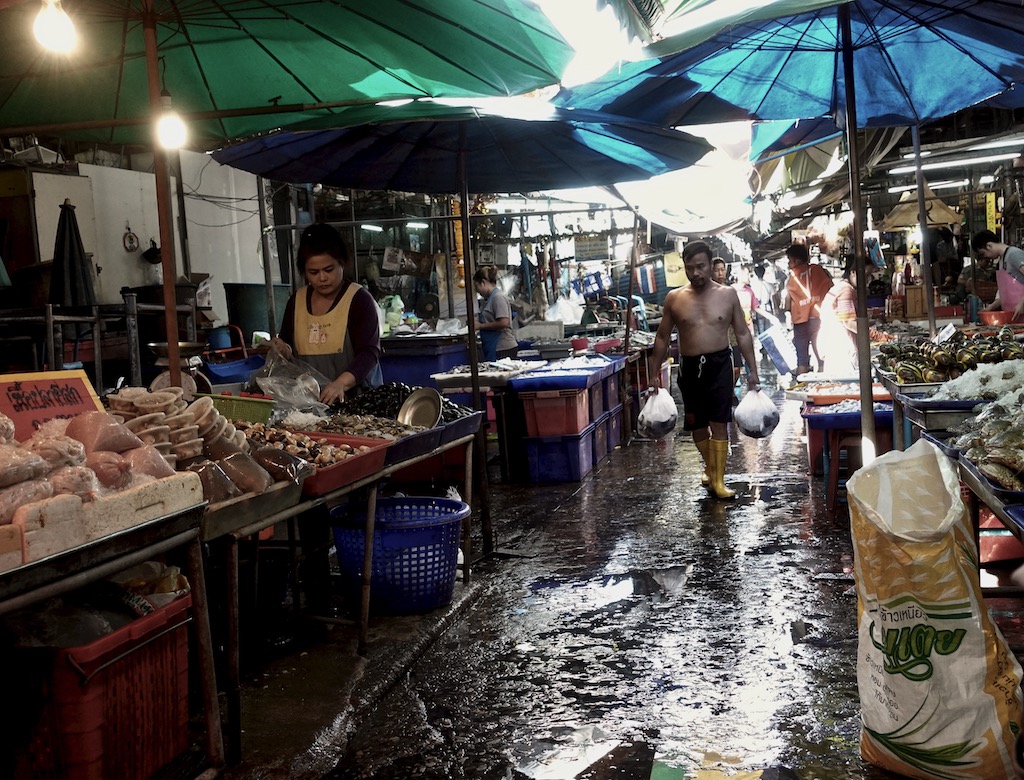
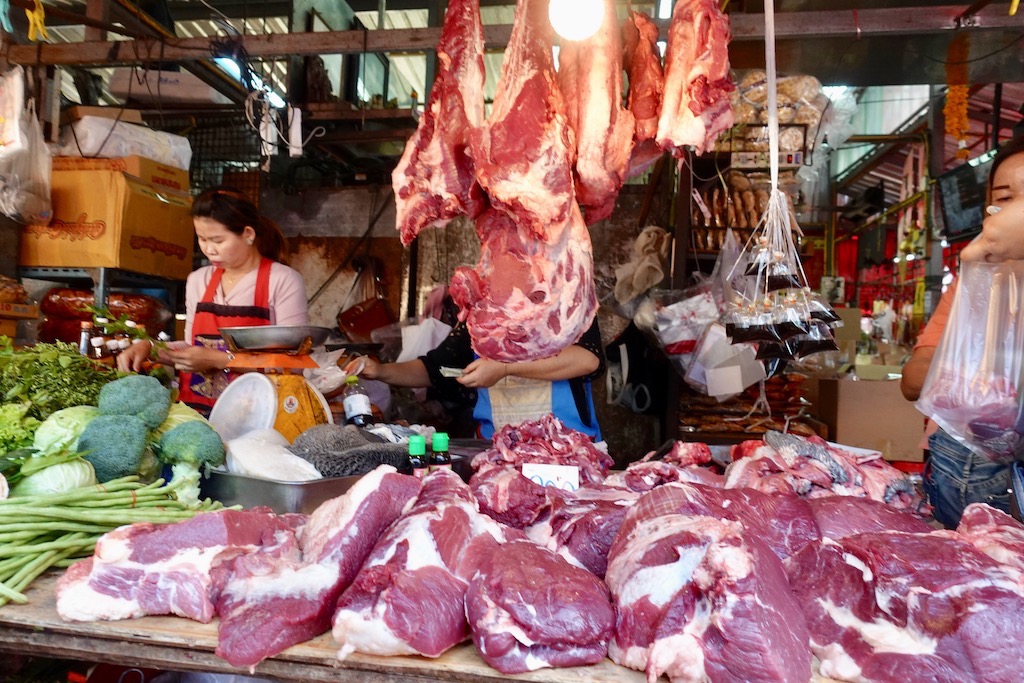
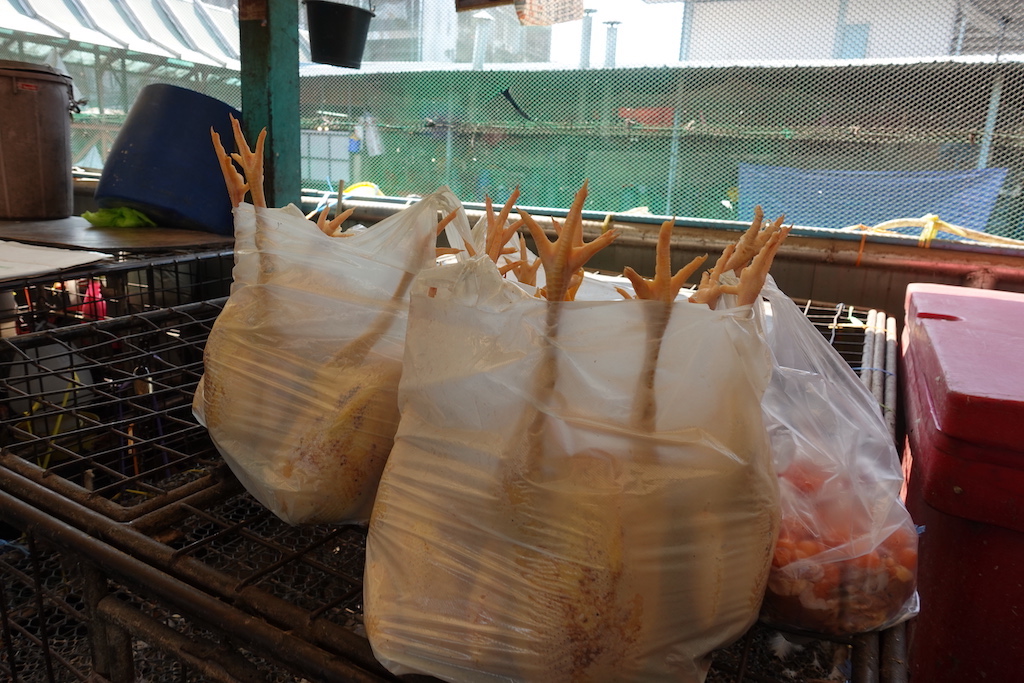
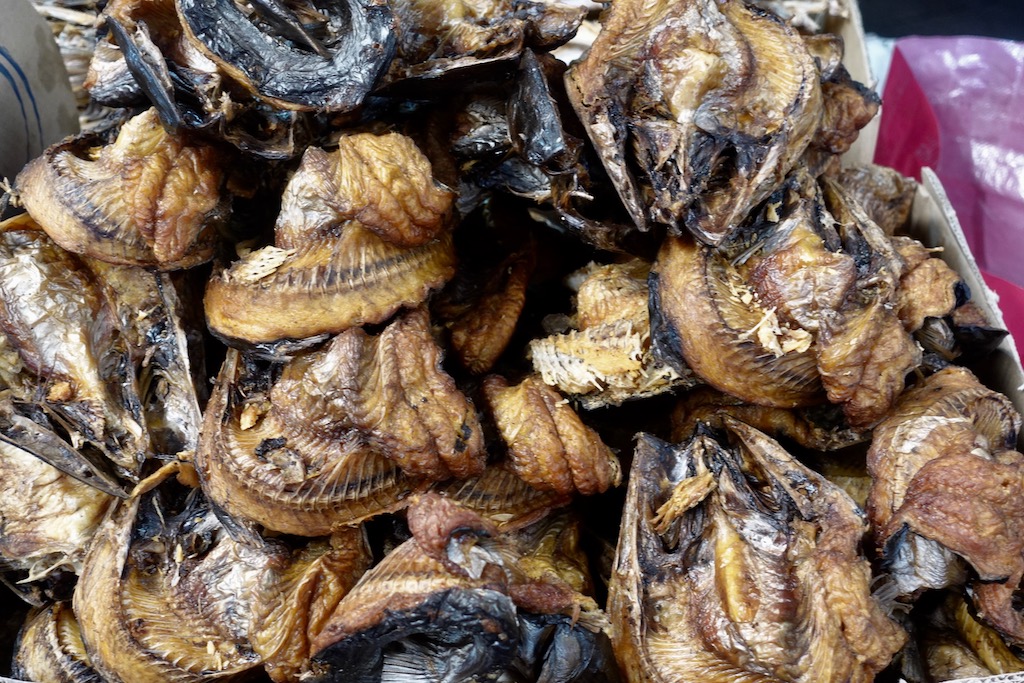
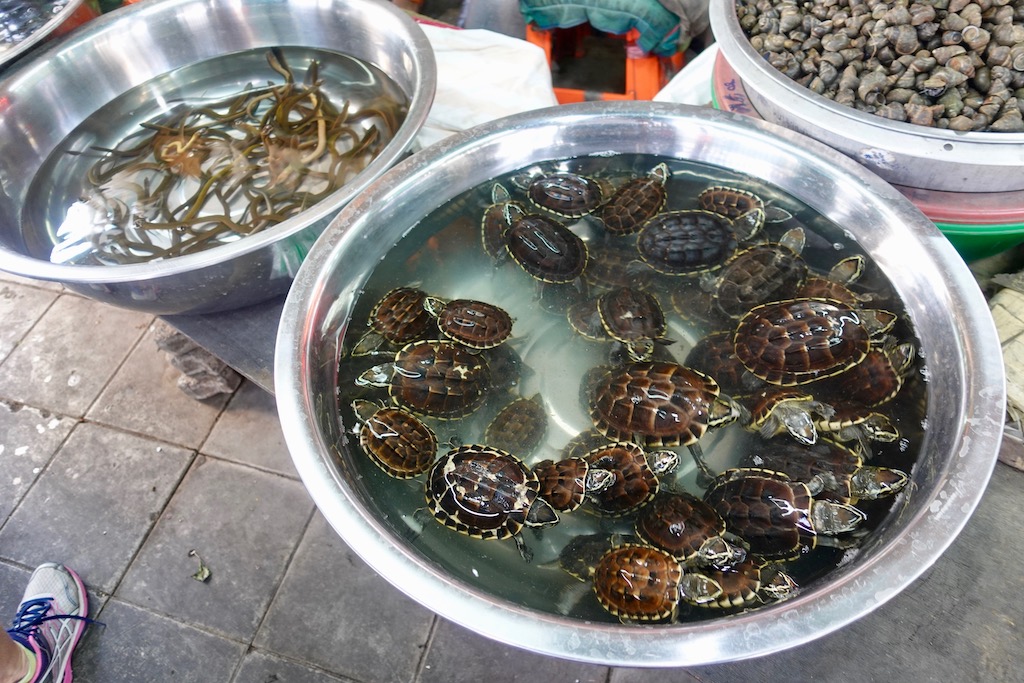
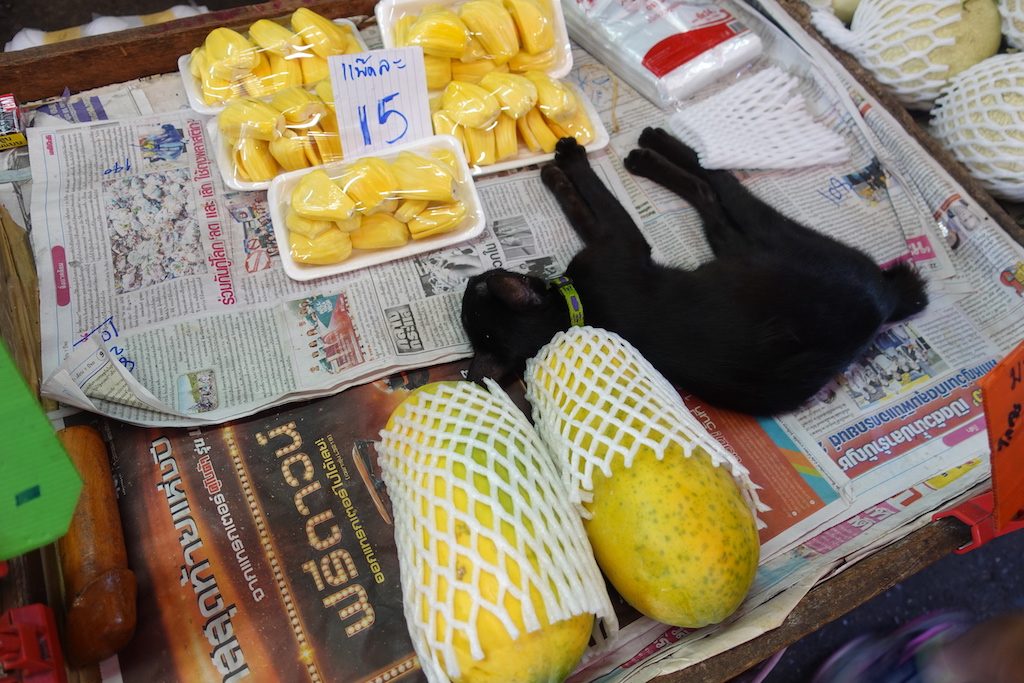
Cindy and John arrived in Bangkok around midnight the day after Christmas (better known as Cindy's birthday). Bangkok at 1 AM is busier than most cities get at any time of day. A few hours later, we hit the streets. Debbie (who had arrived a few days earlier), Cindy, and John walked to Bangkok's biggest fresh market: the Khlong Toei Market. It is mostly a food market...but the word "food" is subjective. The market contains a lot of animals that Westerners don't typically eat, and it was interesting to see the wide variety offered. It seemed as though you could find anything - alive or dead - that croaks, clucks, quacks, moos, or hisses. This was such a fascinating place that we returned a few days later, this time with the rest of the group.
Lumphini Park
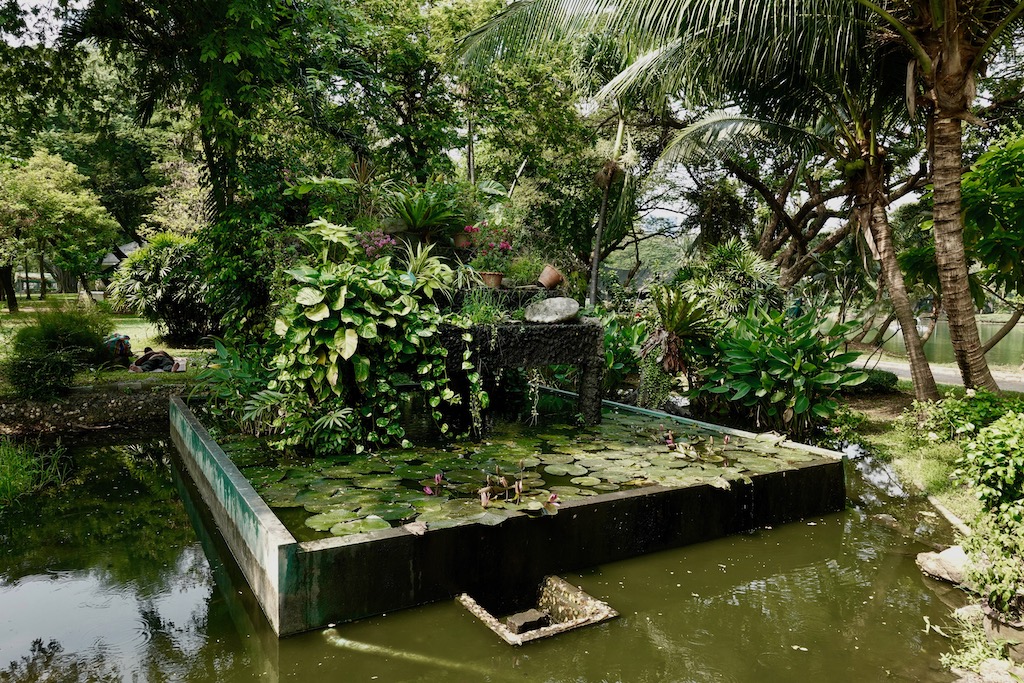
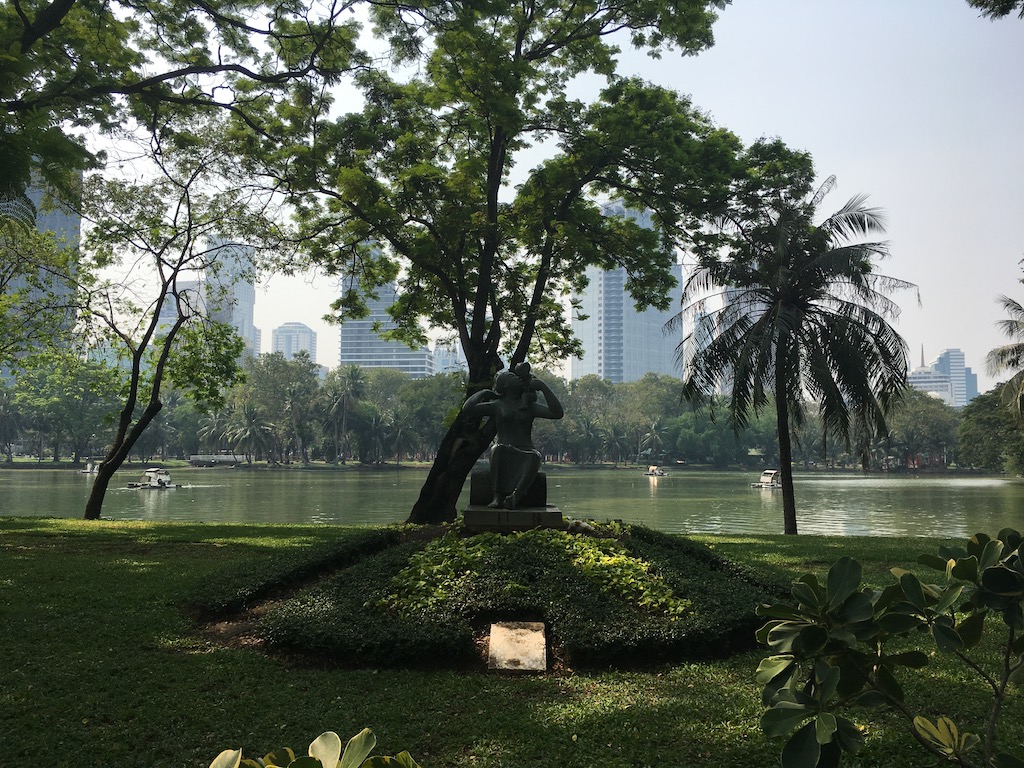
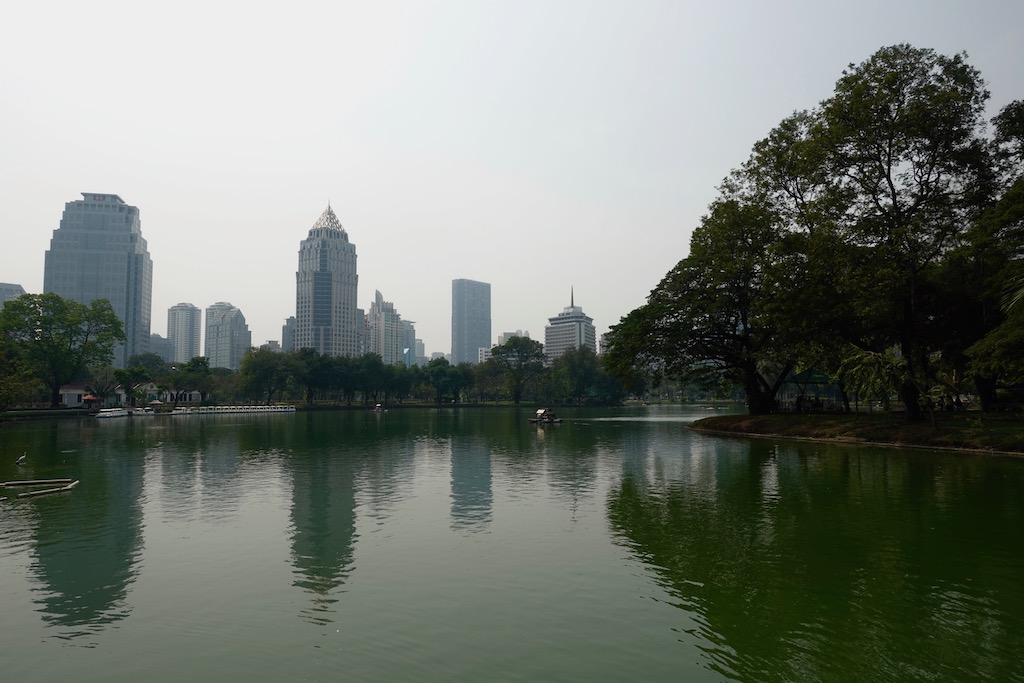
Di, Caitlin, and J arrived around 2 AM the following night. Deciding the best defense against jet lag is vigorous activity, we set out on foot for Lumphini Park. Lumphini Park provides a break from the commotion of the city. It is big, green, and relatively quiet, with giant ravens and four-foot long monitor lizards lazing along the ponds. Built in the 1920s on royal property, it served as a museum until WWI, when it became Bangkok's first park. The park is full of monuments to the history of the place, including one explaining the odd contraptions in the ponds resembling stagnant paddle boats: they are apparently aerators, built by a former king. We made sure to walk through the sculpture gardens before heading back to the hotel.
El Mercado
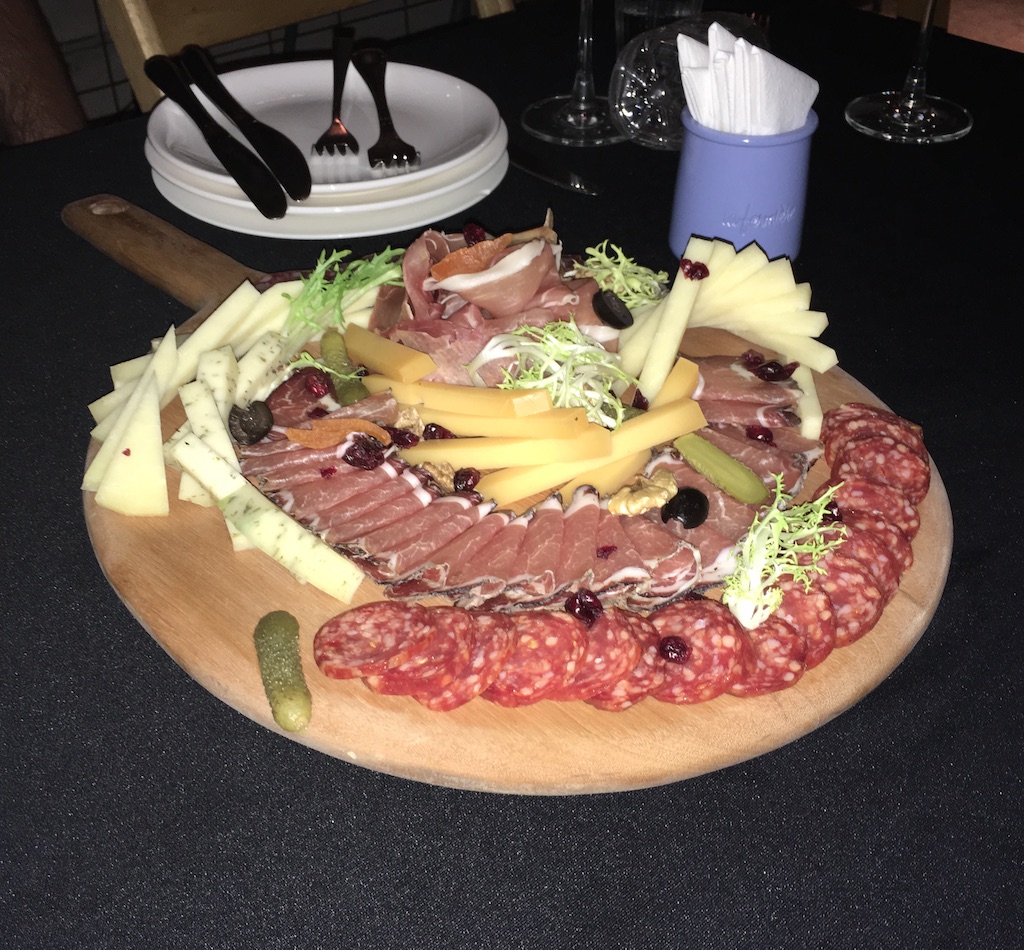
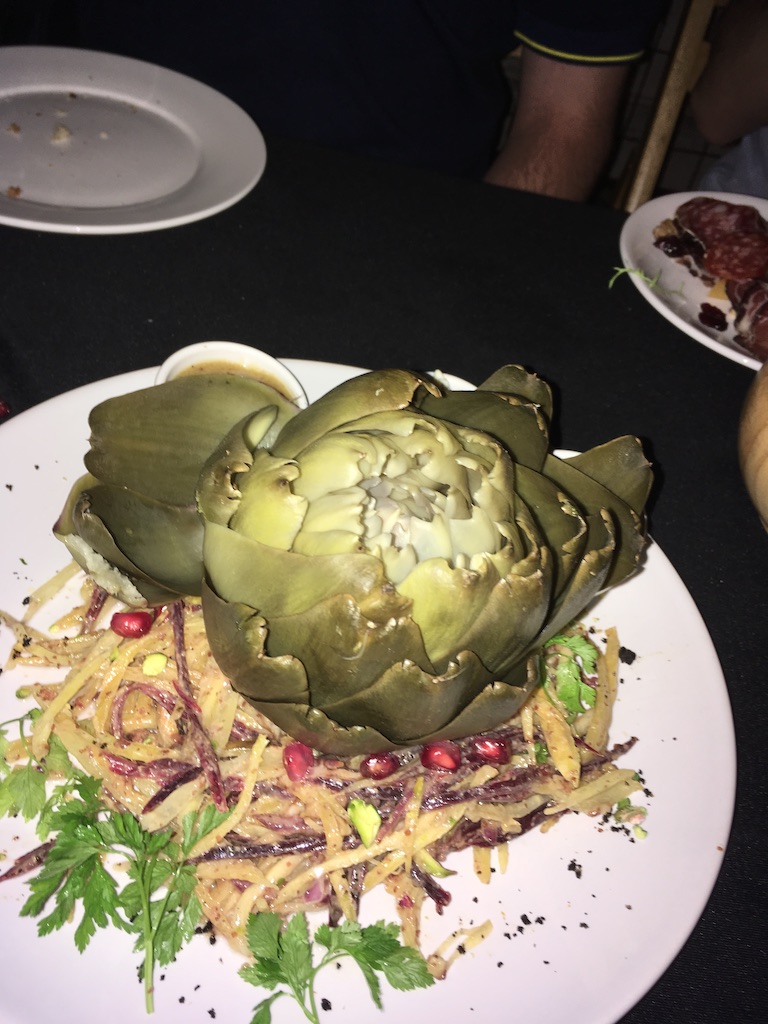
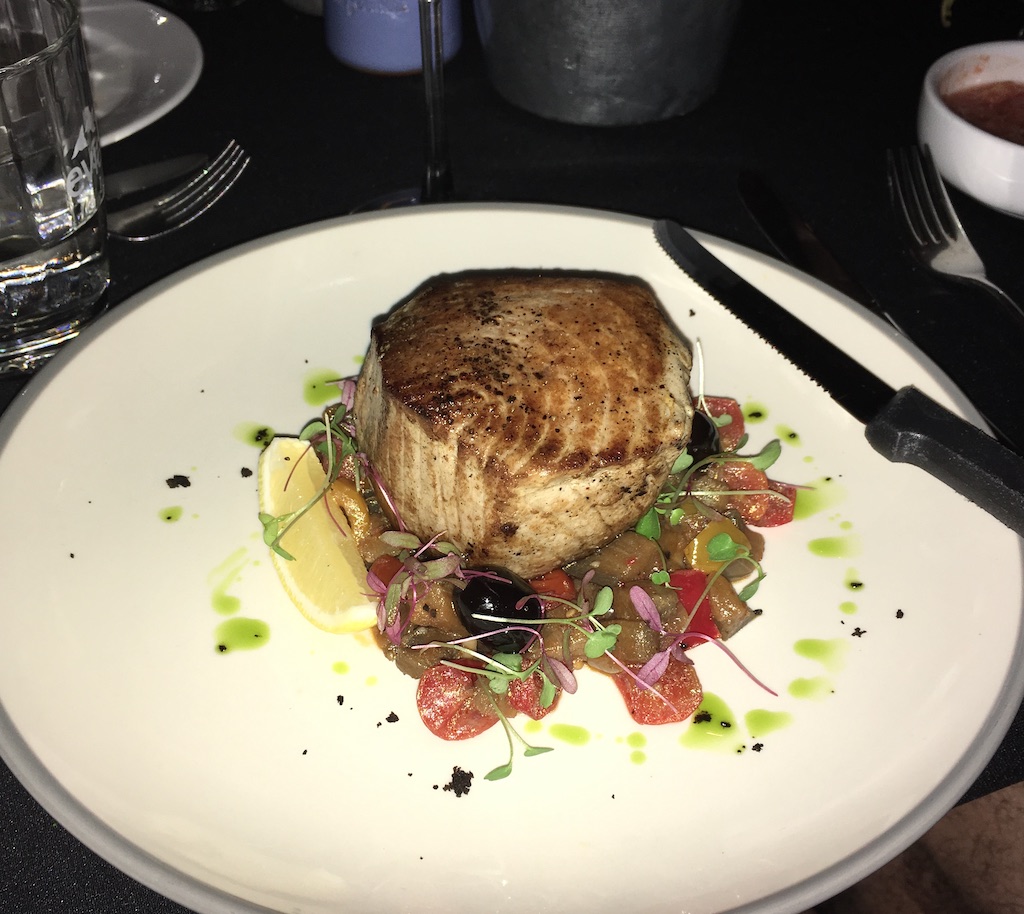
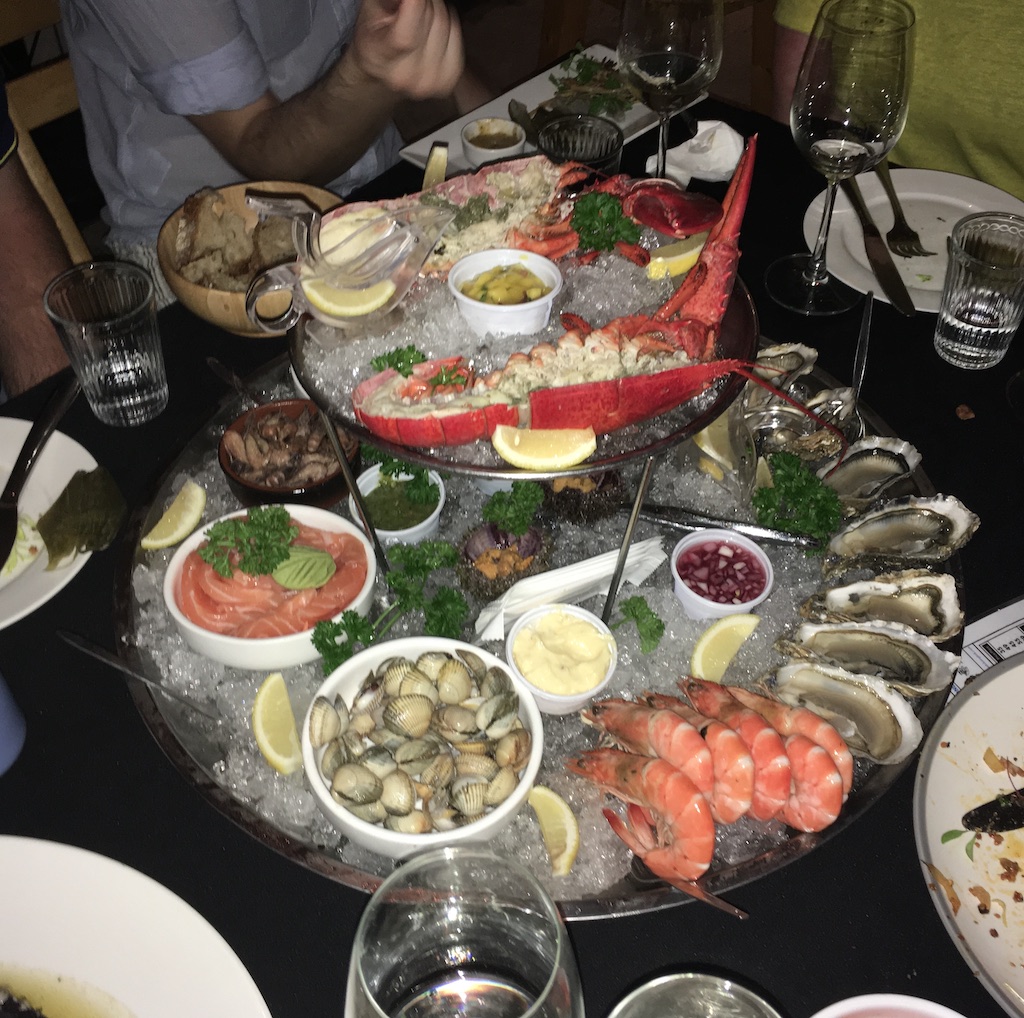
Most people seem to go to El Mercado for the deli, but we were interested in the restaurant. Located in the Khlong Toei district, the restaurant is charming and covered in greenery. You don't receive a paper menu but instead order off the chalkboards around the room. We tried a charcuterie platter from the deli, and then stuck to seafood. It was superb.
Oskar Bistro
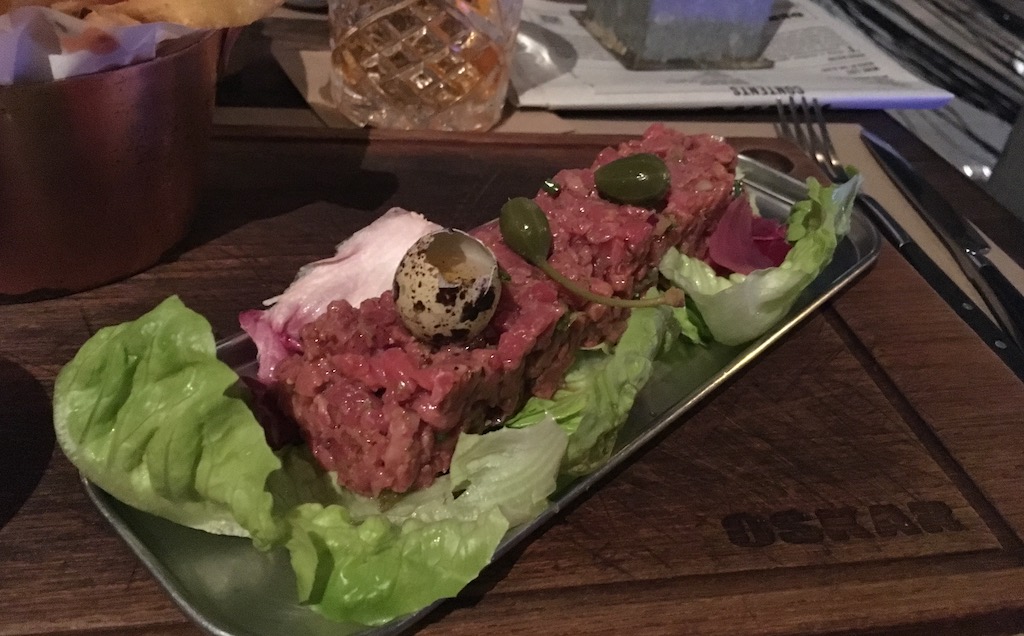
Cindy, John, Caitlin, and J decided to get fancy one night and headed to Oskar Bistro, a steakhouse in the Khlong Toei neighborhood. From the second floor balcony, we watched the city bustling around us while enjoying manhattans and steak tartare.
Chatuchak Market
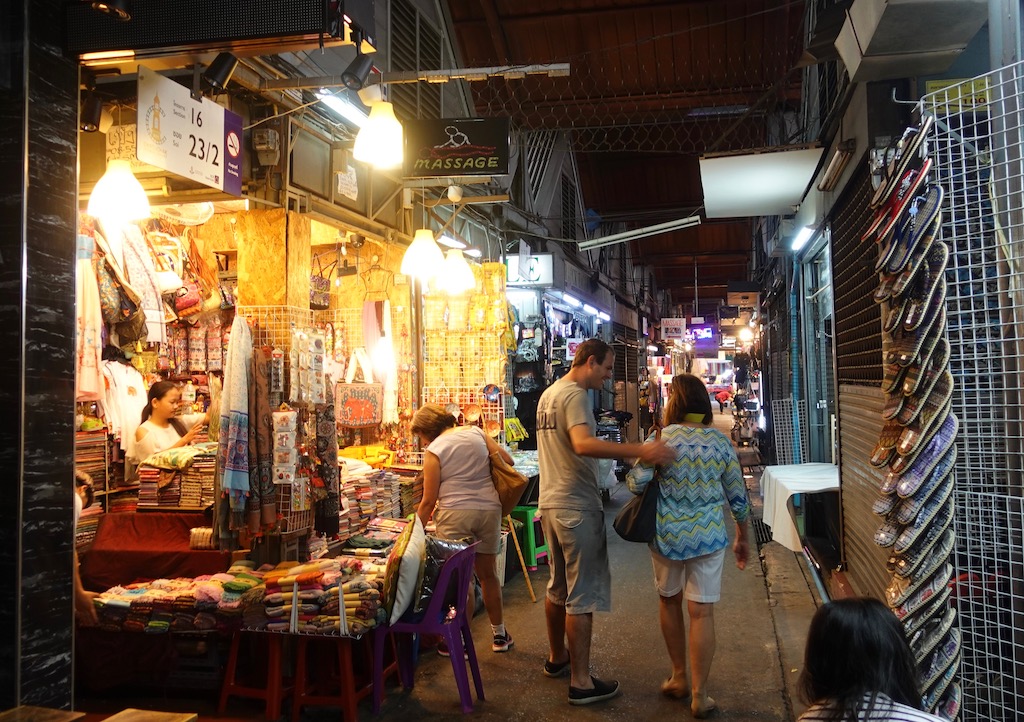
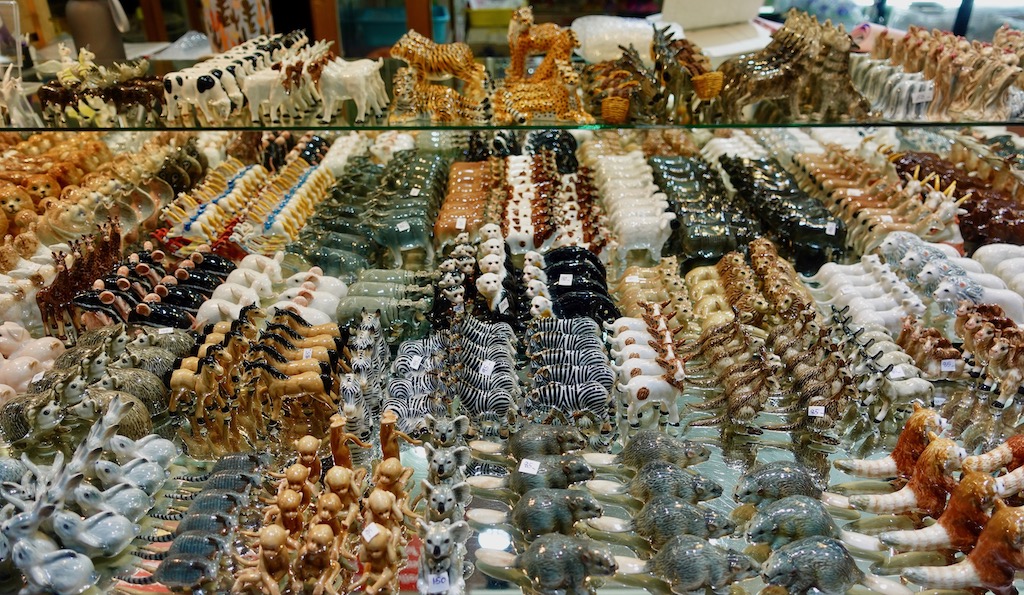
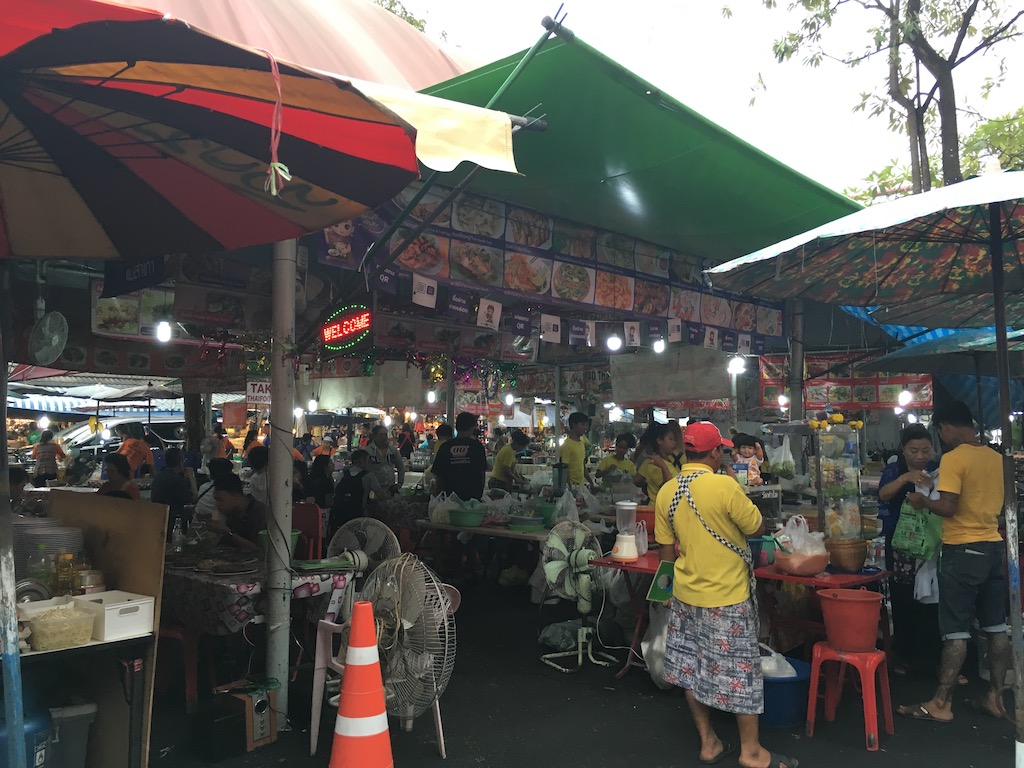
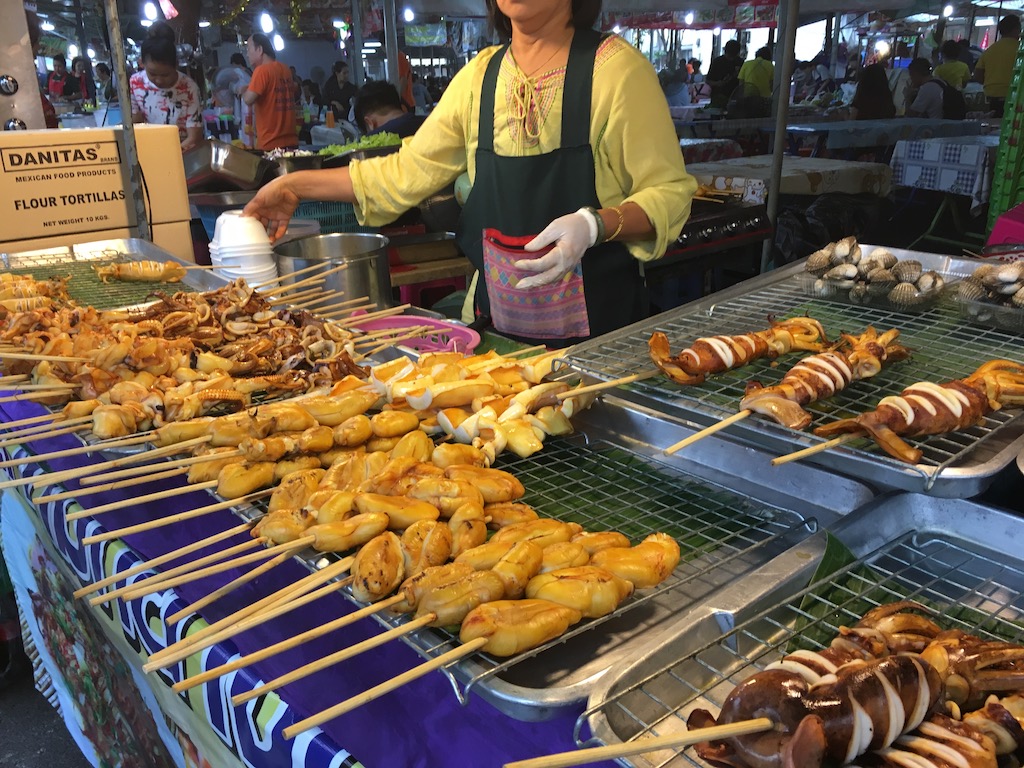
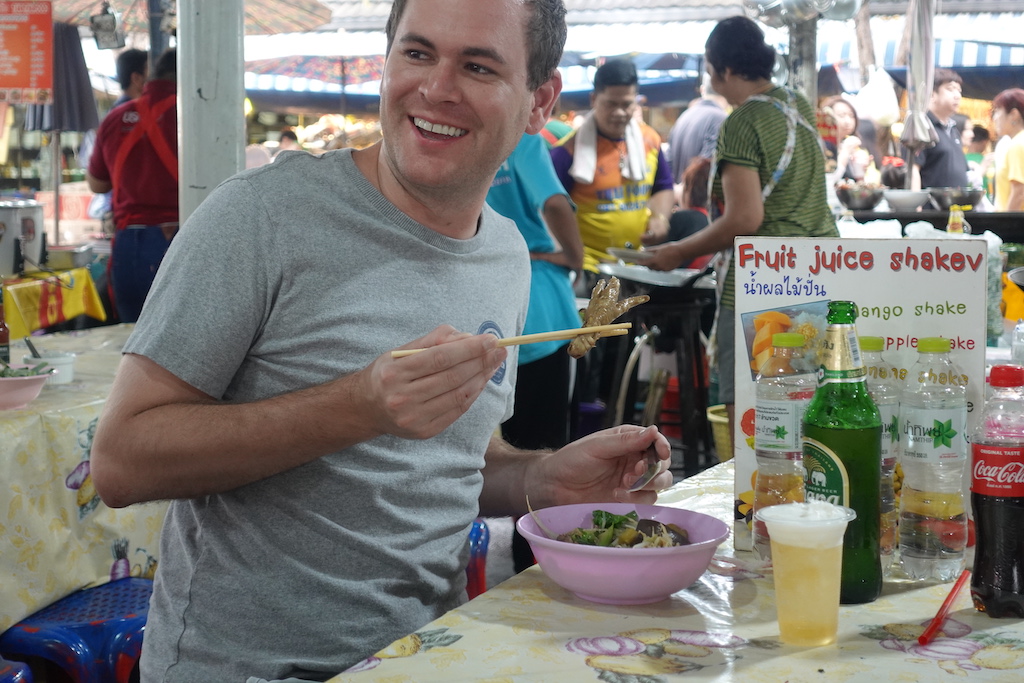
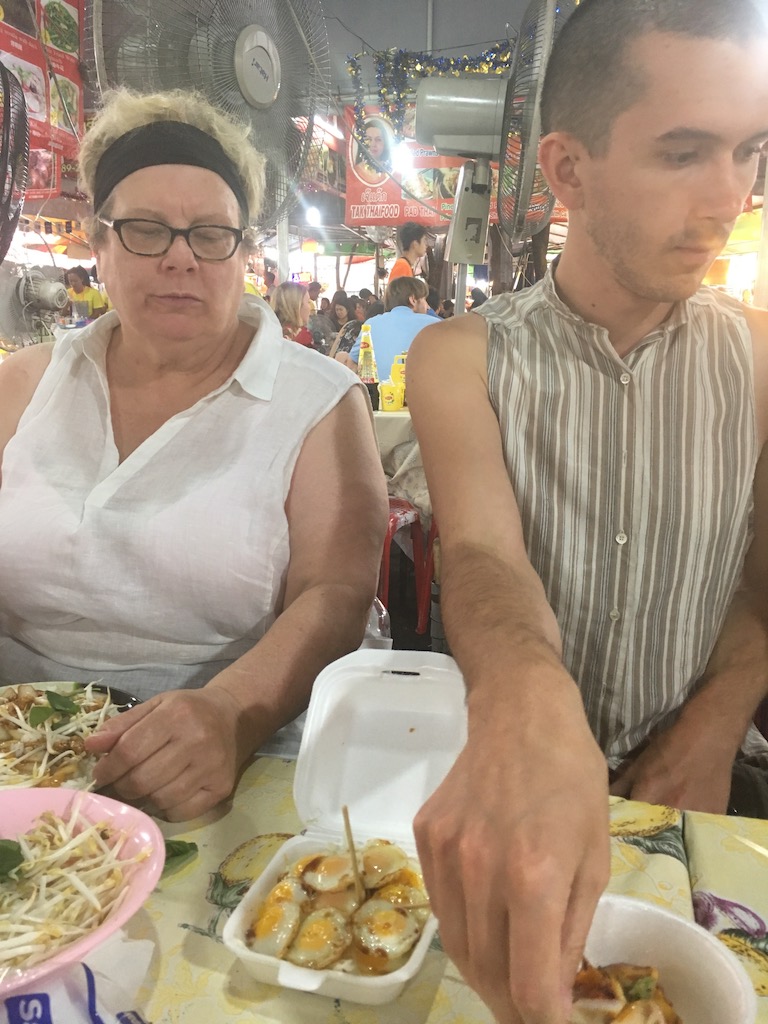
Chatuchak Market is only open on weekends, so we tried fit it in on a Saturday morning, before Deb had to catch her flight home. This was difficult - with over 15,000 stalls and 200,000 visitors each weekend, Chatachuk is the world's largest and most diverse market. We could have stayed there all day. You can find souvenirs, medicine, clothing, jewelry, pets, spices, furniture, art, office supplies, and more in the 27 different sections of the market. If you make it to the center, you'll find a circular room with a shrine in the middle and incense burning around it. There is also a large food court where you can get lunch from one of the many stands. We were not as adventurous as Tyler, who got chicken foot soup, but we tried the quail eggs and squid on a stick, which seemed quite popular.
Condoms & Cabbages
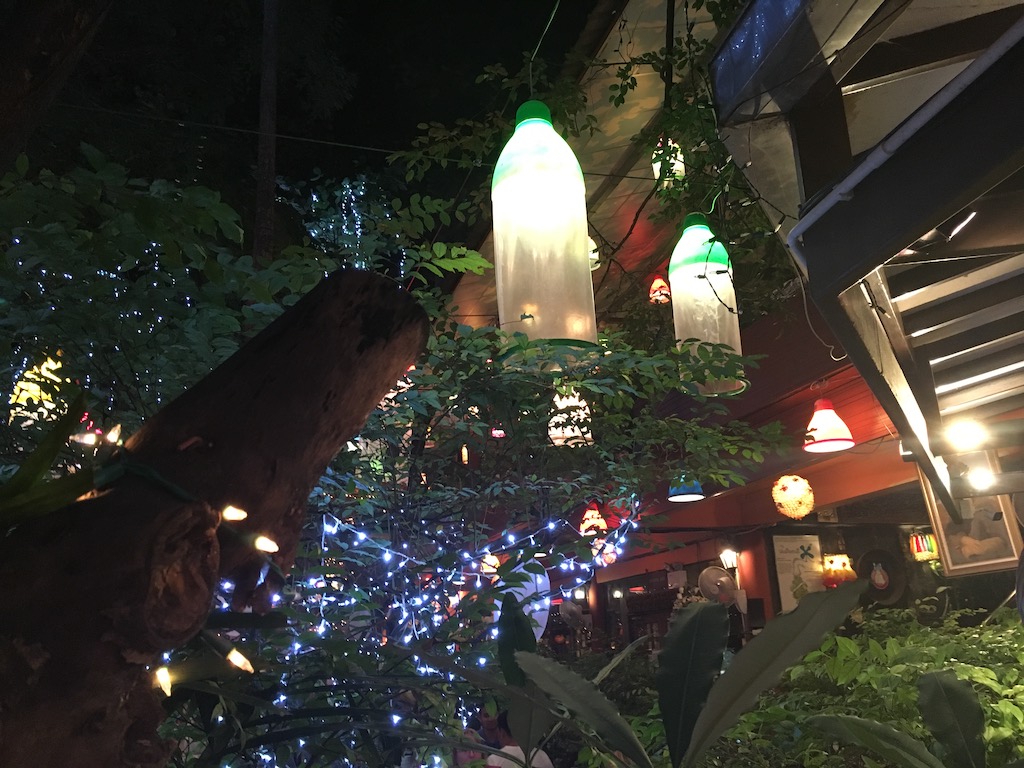
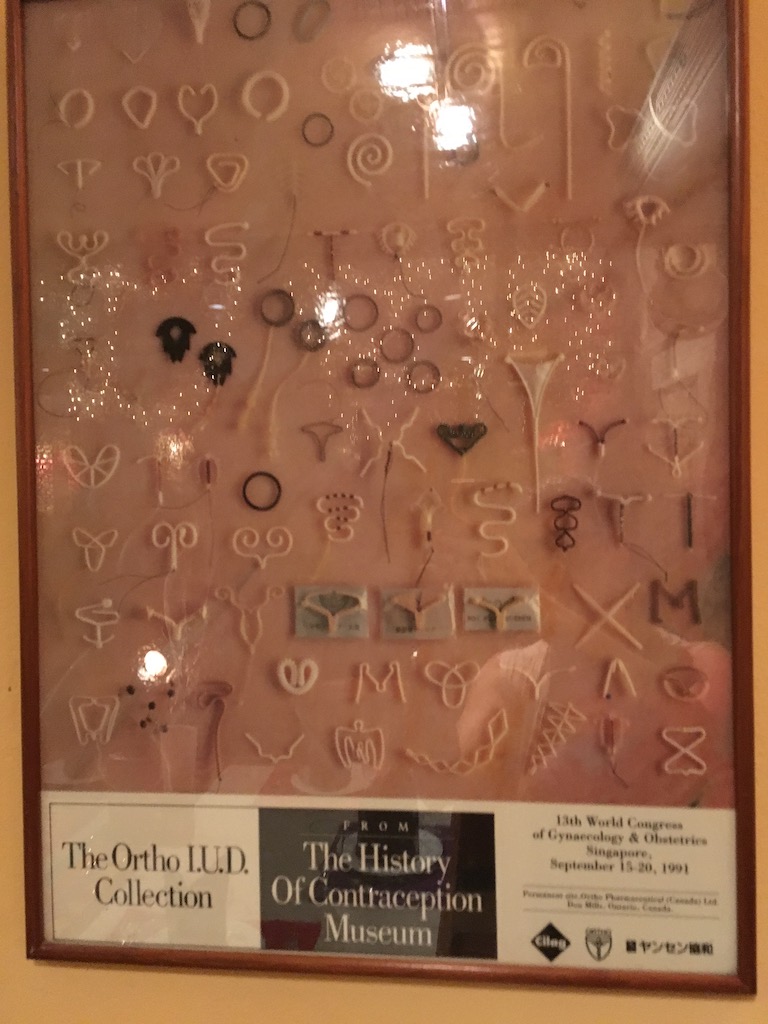
Condoms & Cabbages is a family planning themed restaurant...you read that
right. The restaurant's goal is to promote the understanding and acceptance of family planning and birth control. The
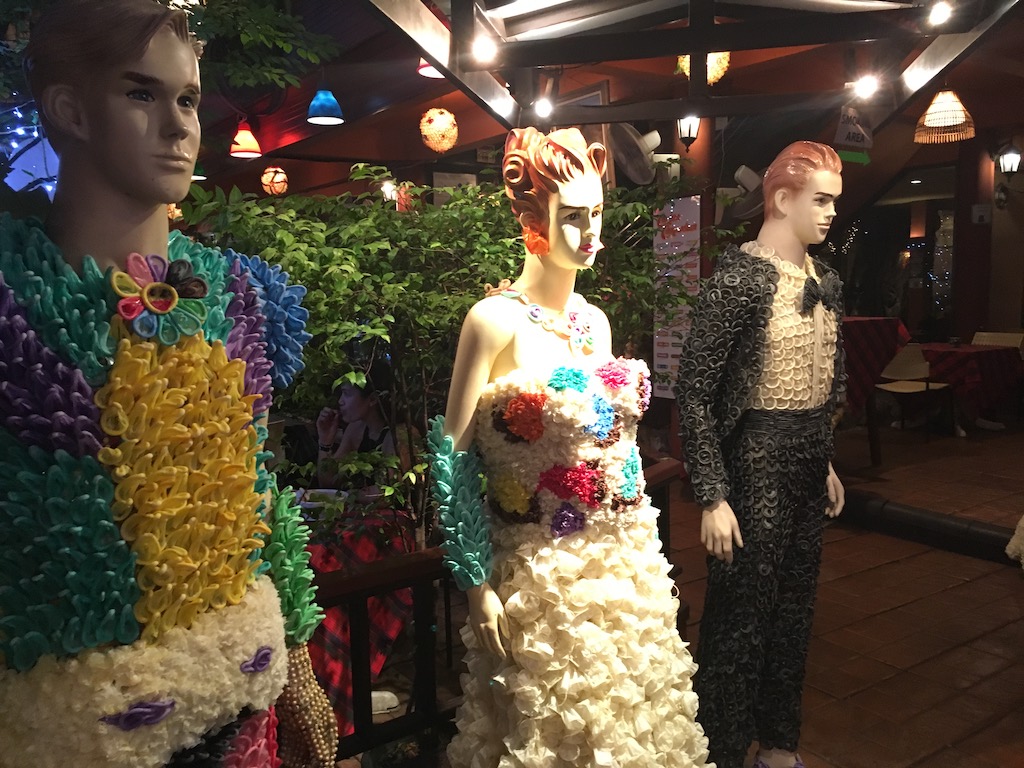
lights are shaped like condoms, the pictures are birth control device diagrams, and the decor is mannequins dressed
in clothes made entirely from condoms. The only thing in the restaurant that doesn't involve family planning devices is, thankfully,
the food, which was tasty.
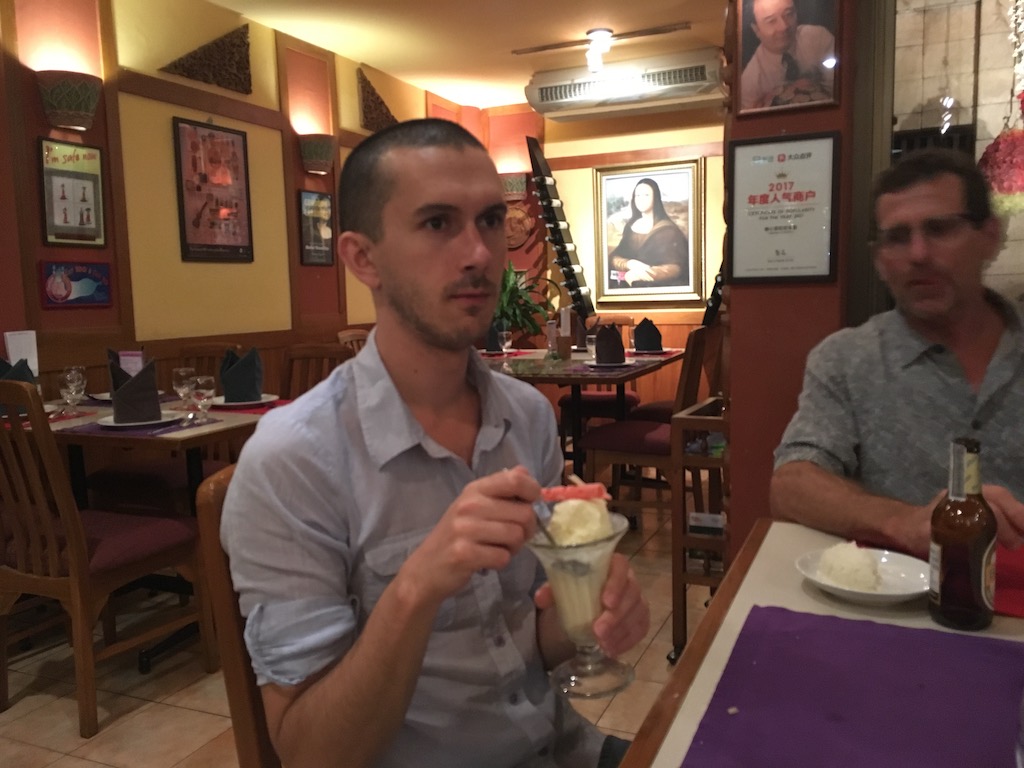
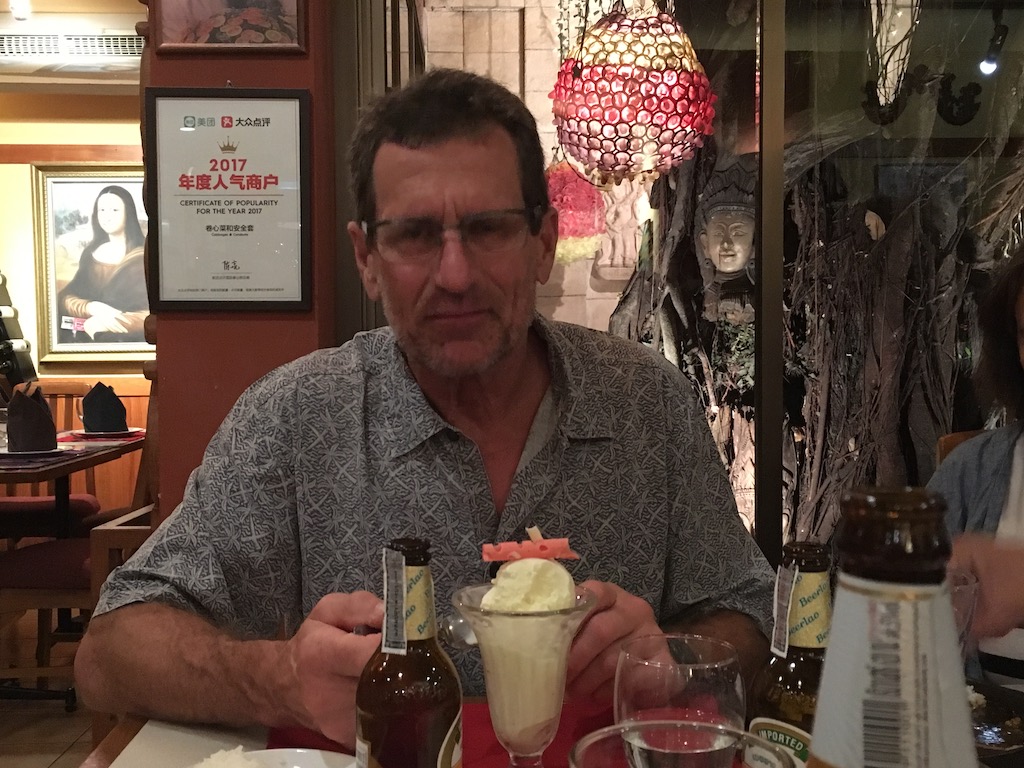
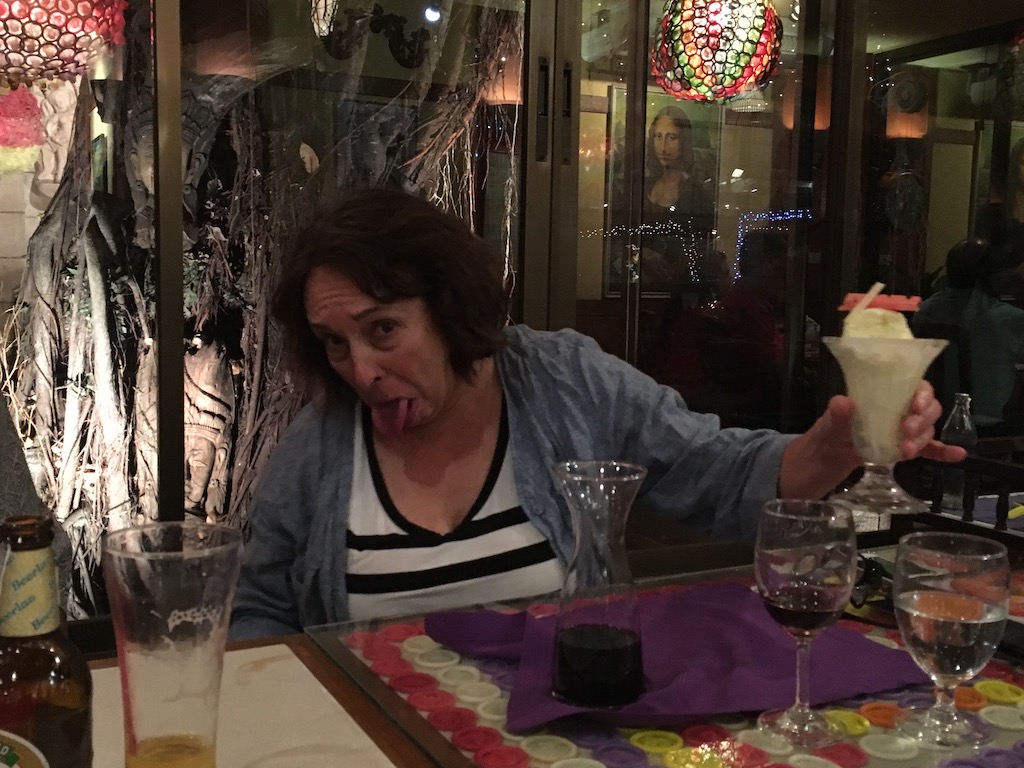
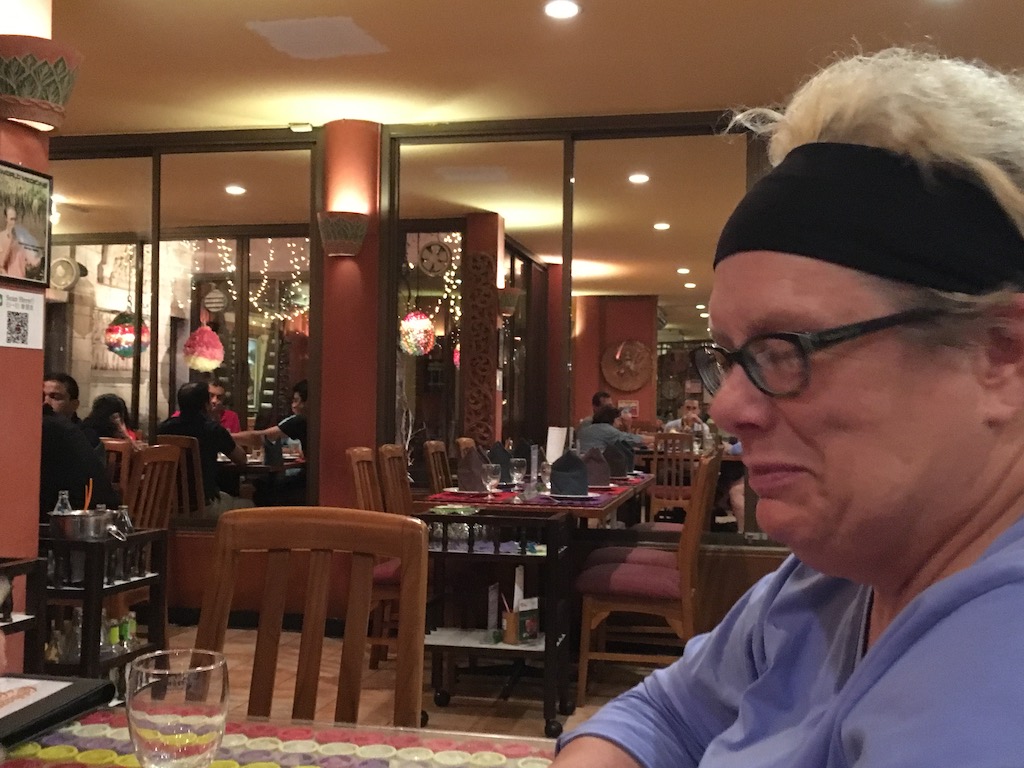
This is also where we tried durian ice cream.
Durian is a fruit that is banned in most buildings, including hotels, due to its smell. Our reactions are below.
Jim Thompson House
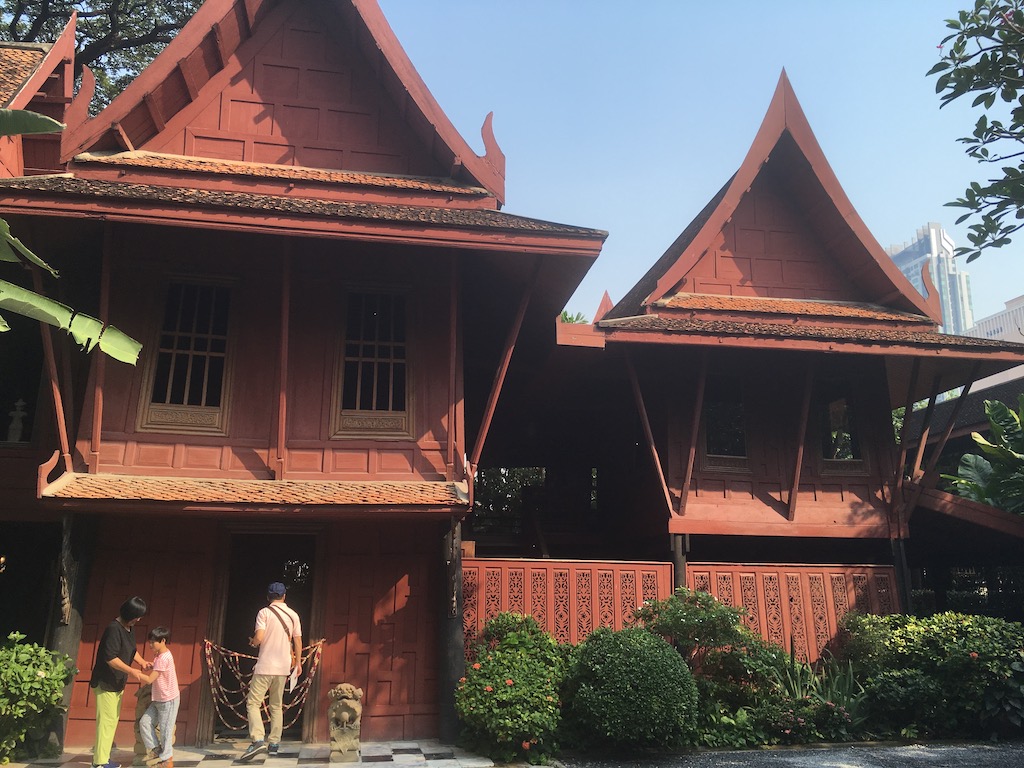
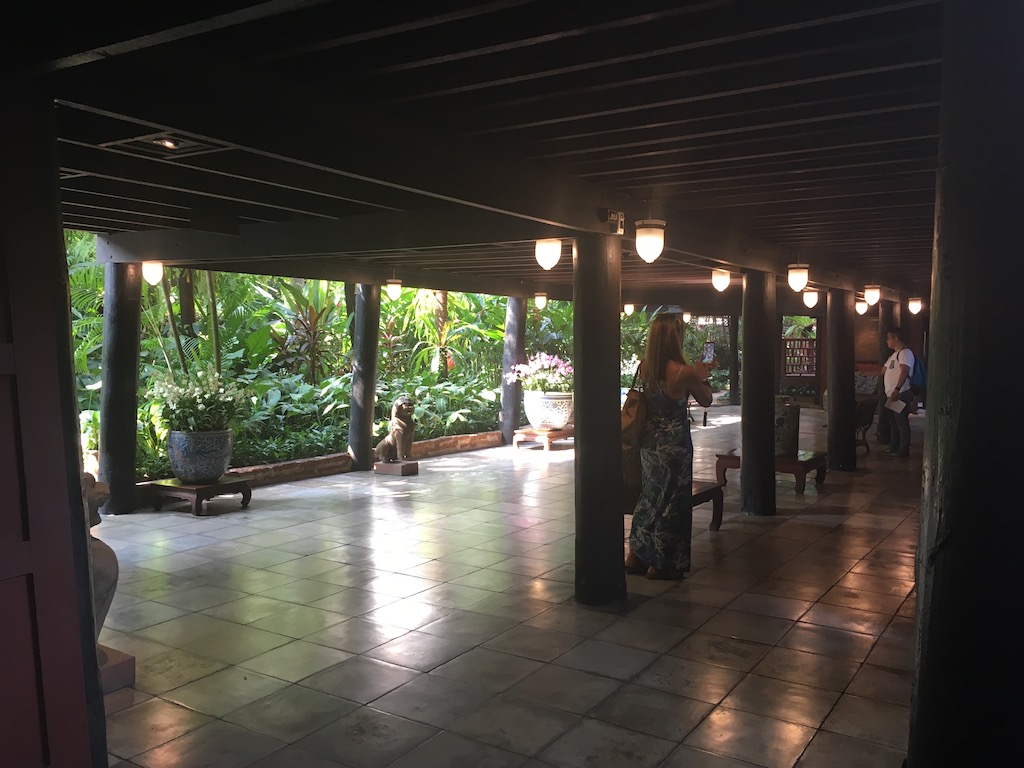
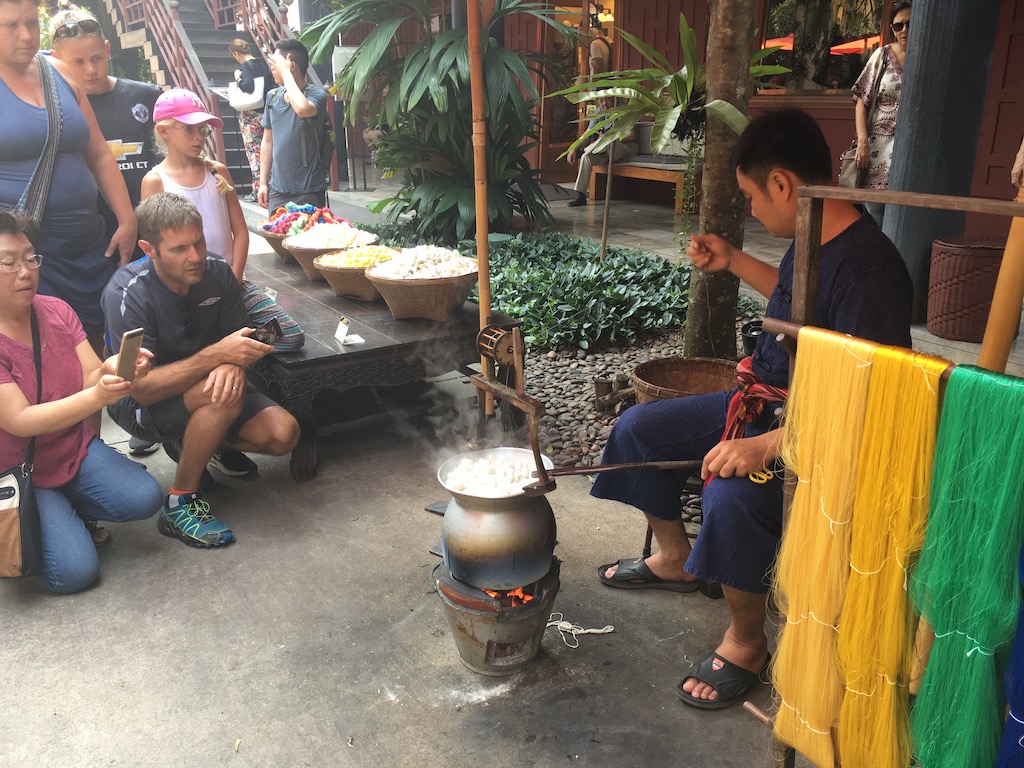
Jim Thompson was an American businessman known in Thailand for revitalizing the silk industry, and known throughout the world for his mysterious disappearance in 1967. A decade before he disappeared, at 52, Thompson decided to build a home to showcase the artwork he had collected over his life. This was where he was living when he disappeared, and later became a museum known as the Jim Thompson House. After removing your shoes, you can participate in a guided tour, which takes you through different parts of the house, showcasing both the architecture and the pieces in Thompson's collection. At various times, you enter the garden, which seems to be interwoven with the house and emits an aura of relaxation. As we were leaving, a man was demonstrating how to make Thai silk from silkworm cocoons.
W District Market
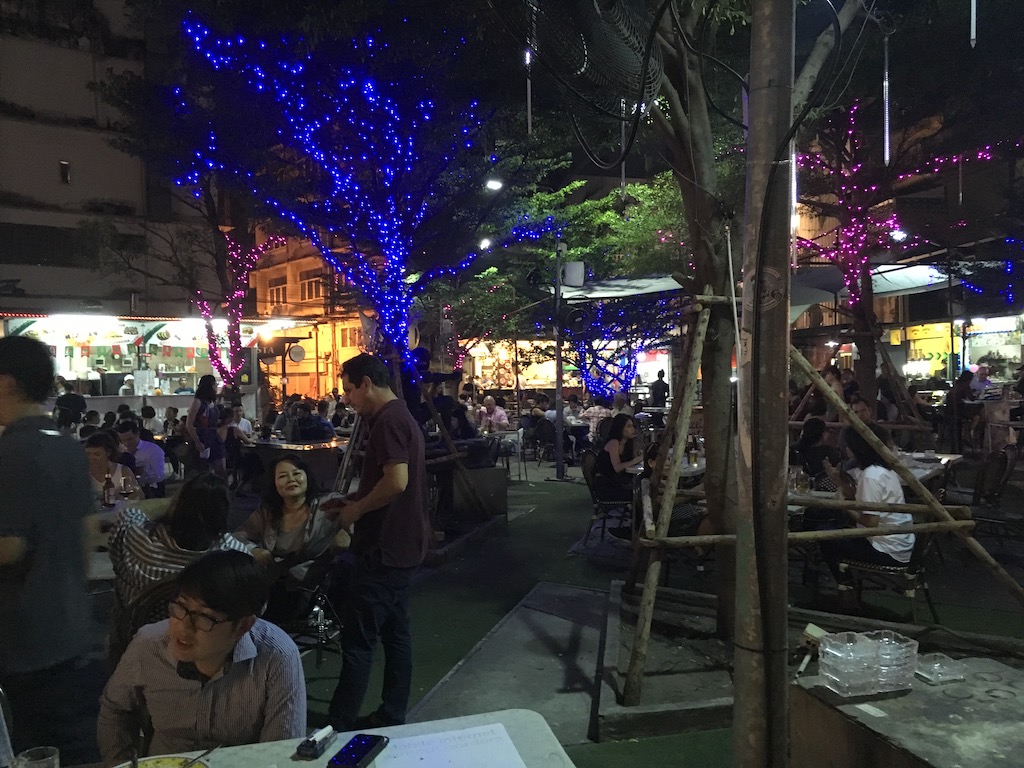
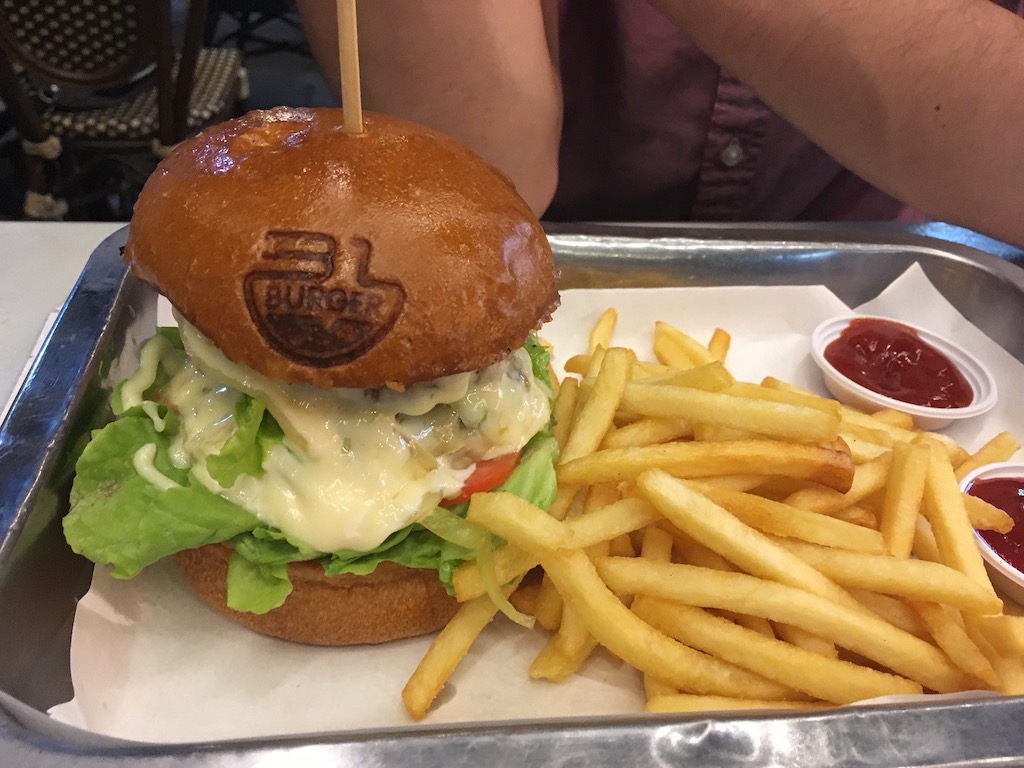
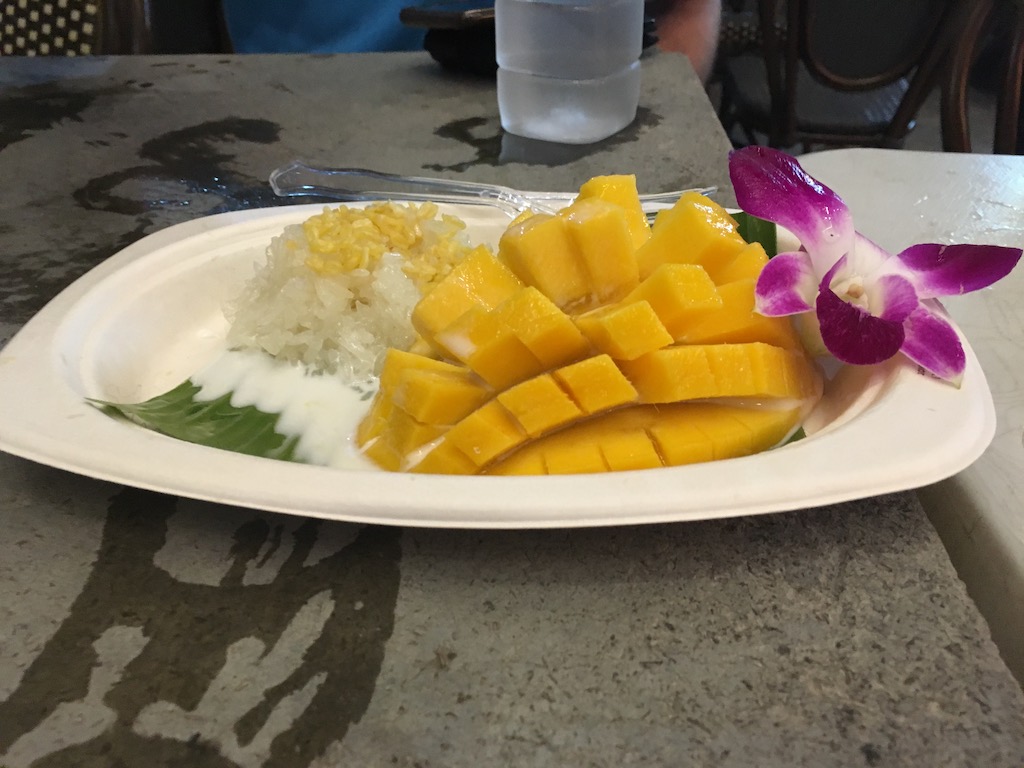
The W District Market is a plaza full of artwork and food stands. These weren't like the other food stands we saw in Bangkok - small, portable vendors serving sticks or cups of meat. Instead, these were more like permanent food trucks, serving everything from Thai to tacos, from pizza to pasta. We got a mini tower of beer and sat at a picnic table while enjoying our Indian food, burgers, and mango with sweet rice.
Brewski
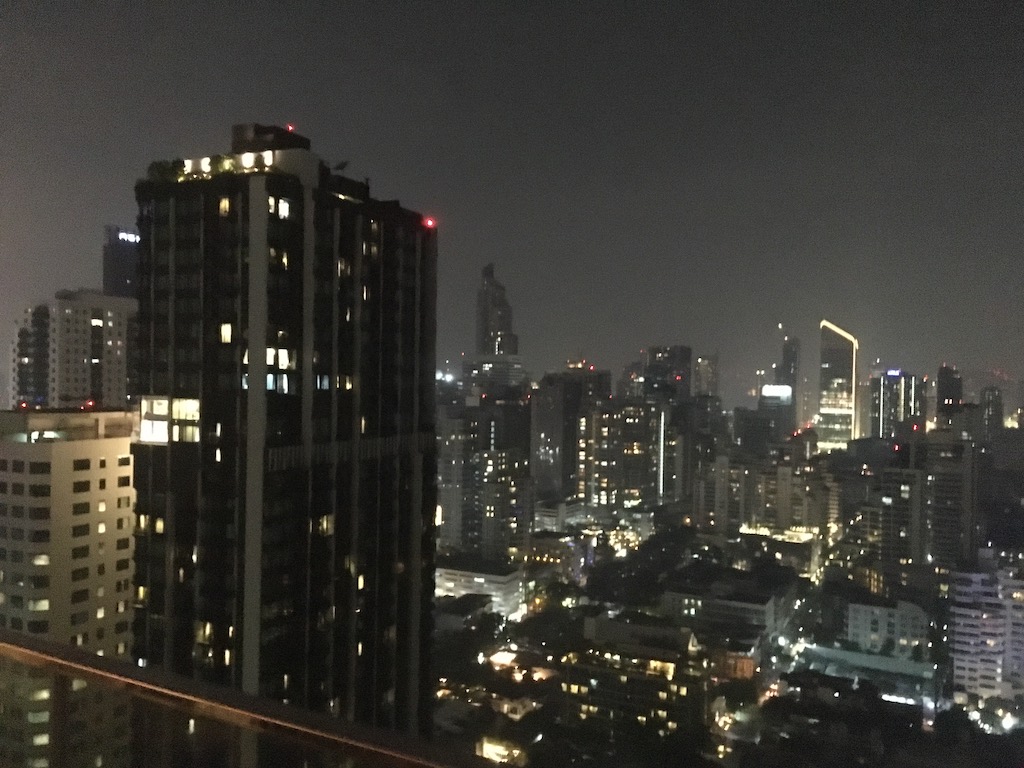
After eating at W District, Tyler suggested we go to Brewski - a craft beer spot on the 30th floor of the Radisson Blu hotel. The beer was tasty, the atmosphere was fun, and the view was beautiful.
Grand Palace
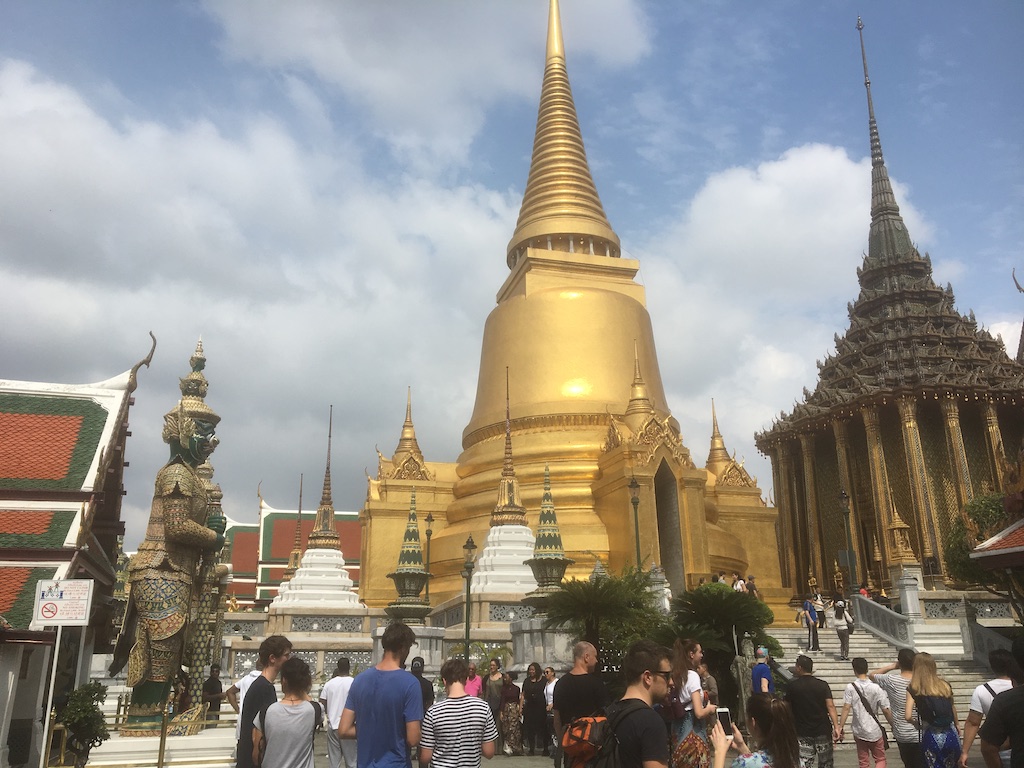
The Grand Palace is one of the most popular
tourist attractions in Thailand, and for good reason. It's absolutely spectacular. The ticket to enter was 500 baht (about $15 USD)
and the audio tour was an additional 200 baht. The audio tour was very informative, and set up well. It takes you to all
of the sections of the palace and gives you a brief history behind each one. Still, it's hard to stop yourself from prematurely moving
to the next building, since each is more impressive than the last. Even the trash bins were beautifully decorated.
Built in 1782, the palace is divided into four sections: (1) the outer court, which contains public, government buildings; (2) the middle court, which
contains the gold-plated buildings and manicured gardens most commonly associated with the Grand Palace; (3) the inner court, reserved
for the royal family and closed to the public (although this hasn't been the royal family's permanent residence since 1925);
(4) the Temple of the Emerald Buddha. From a tourist's perspective, a more
intuitive way to divide the sights are into the ornate, golden, intricately-decorated buildings and statues on the one hand, and
the halls and gardens on the other.
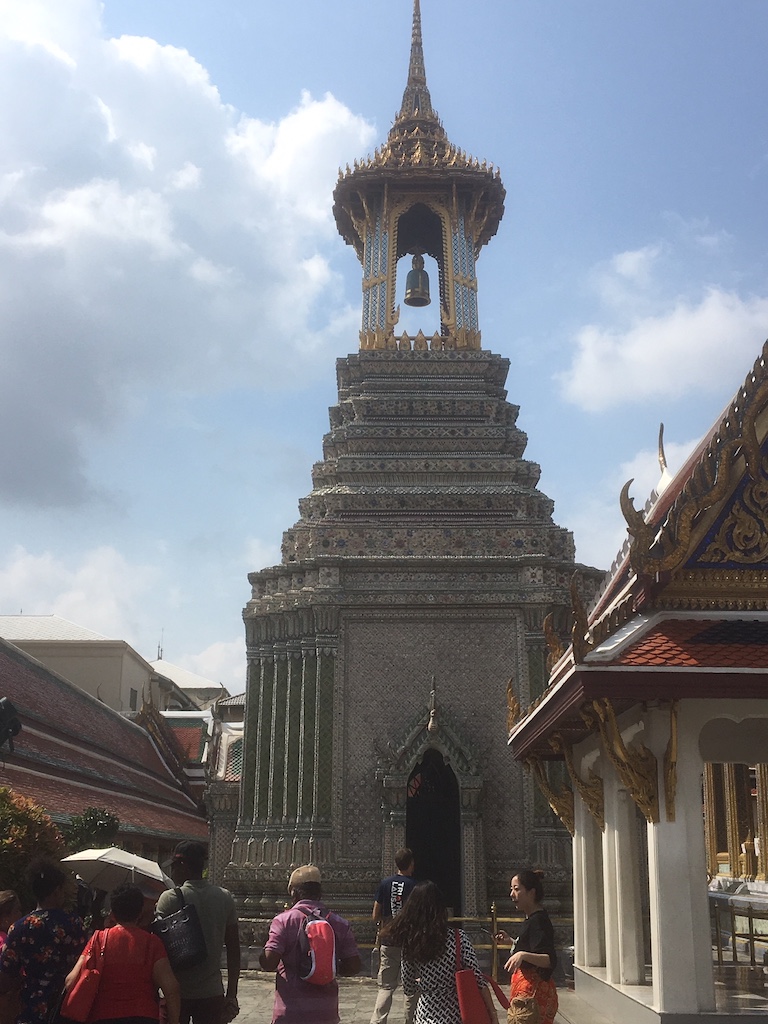
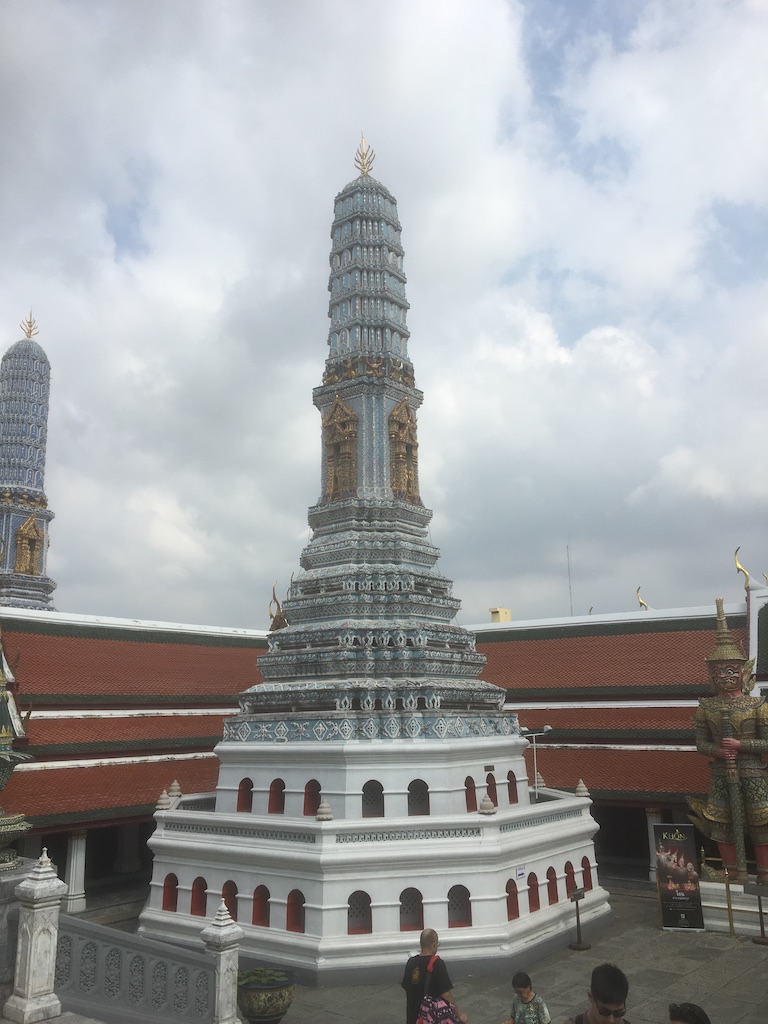
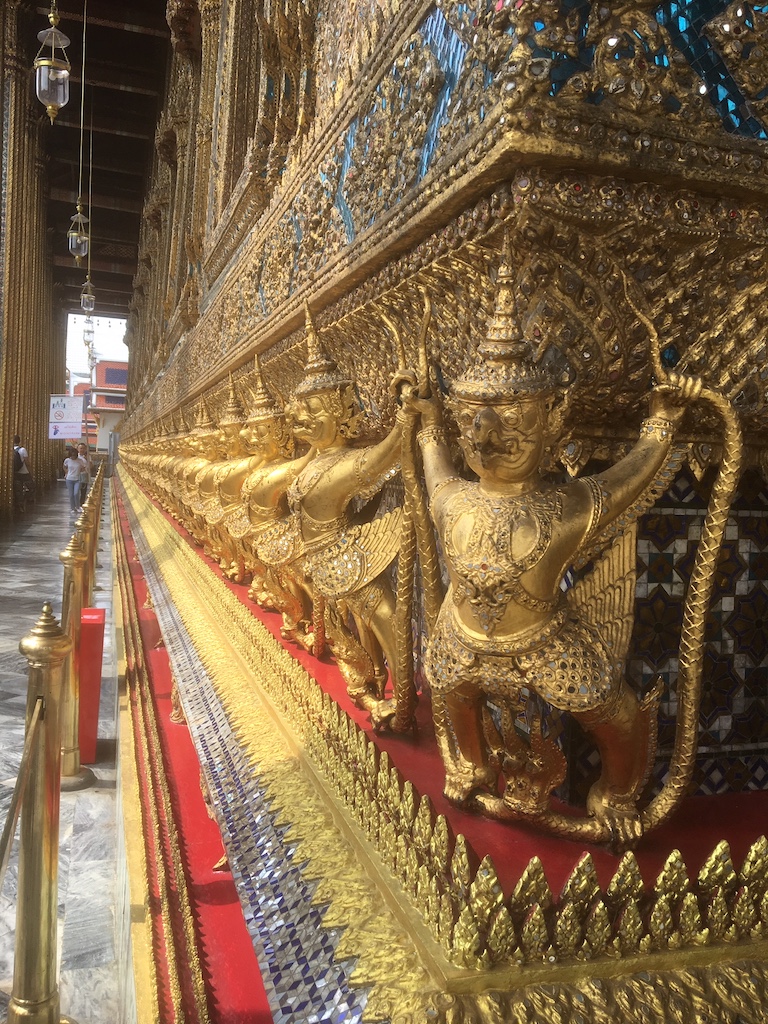
When you enter the middle court, the first thing you see are large golden spires to your left. These are a collection
of temples and chapels. Each is different but equally ornate. Phra Siritana Chedi is an entirely gold plated conical-shaped building,
while Phra Mondop, immediately next to it, is shaped more like the parthenon, but with small instricate platings and paintings
all over it. Just past these is a miniature replica of Angkor Wat, the famous
Cambodian shrine. Phra Asadha Maha Chedi consists of eight spires, each a different color representing a different aspect of Buddhism.
The most popular monument in this section is the
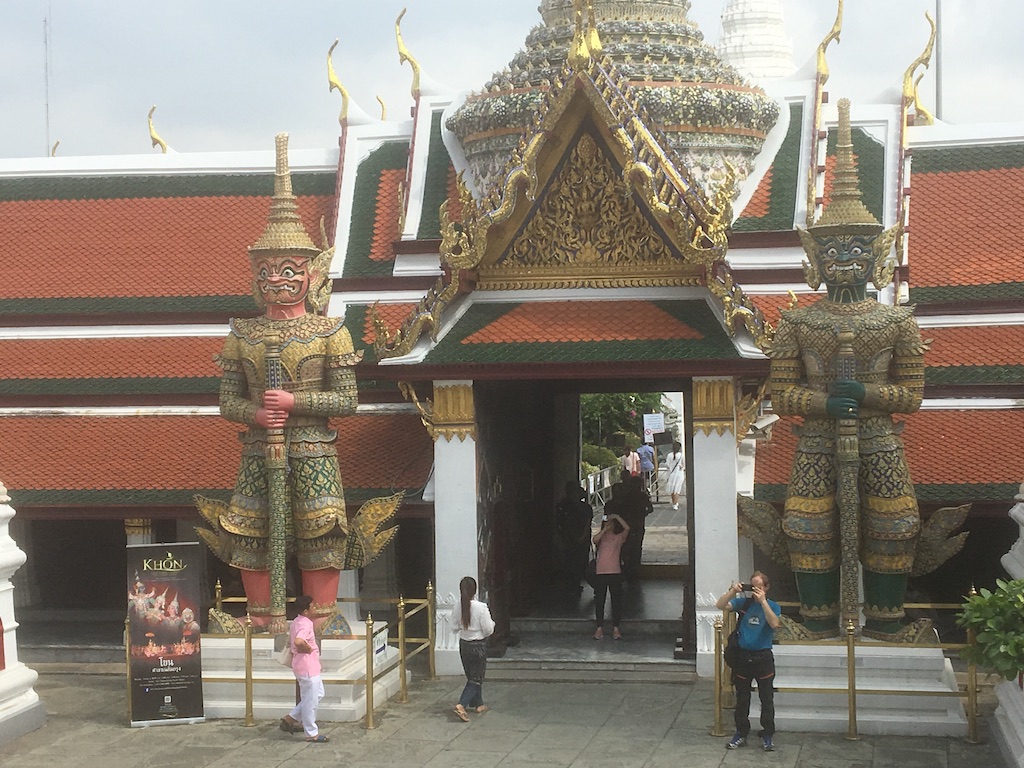
Temple of the Emerald Buddha, regarded as the most sacred Buddhist temple in Thailand. This is a chapel housing the famous
Emerald Buddha, an emerald-colored statue made of jade or jasper of the Buddha sitting in a lotus position. No one but the
Thai King may touch the Emerald Buddha, whose golden clothes are changed according to the season (hot, cold, rainy). There are six
sets of demon guardians in this section, most facing the Temple of the Emerald Buddha to protect it from evil spirits.
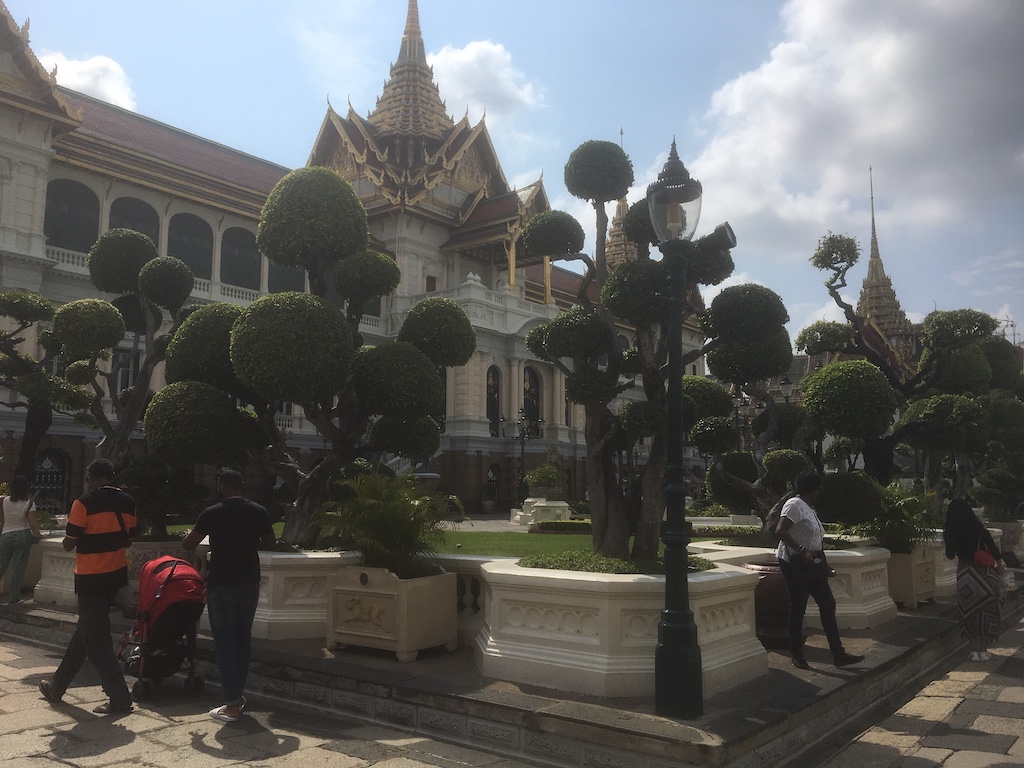
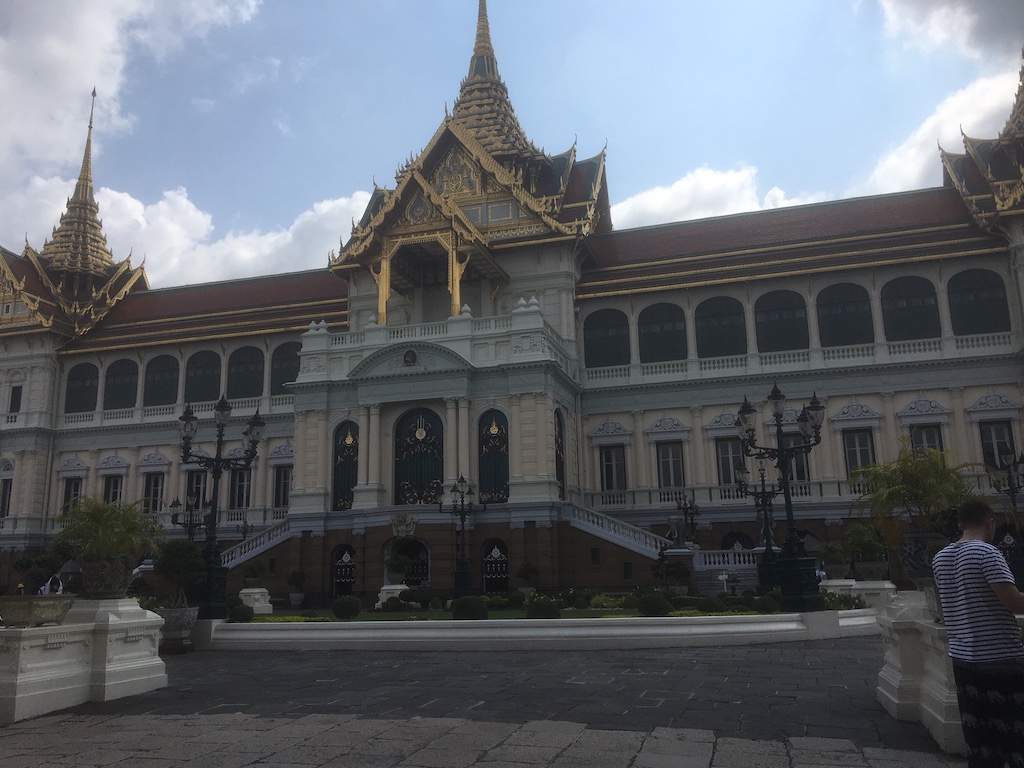
After admiring these buildings, you exit into the gardens where you begin to pass the halls. Most of these are relatively small and plain compared to the temples, but provide a sense of calm after the extravagence of the previous section. After passing several smaller halls, the grounds open up into a large, flat garden space, with Chakri Maha Prasat Hall looking over the yard. The Hall was built in 1877 by King Rama V, who wanted a western style home. However, others on the king's court argued that his home should have Thai themes, so the original domed roof was replaced by a traditional Thai roof. After walking through the gardens, you can stop in some of the smaller museums before leaving.
Wat Arun
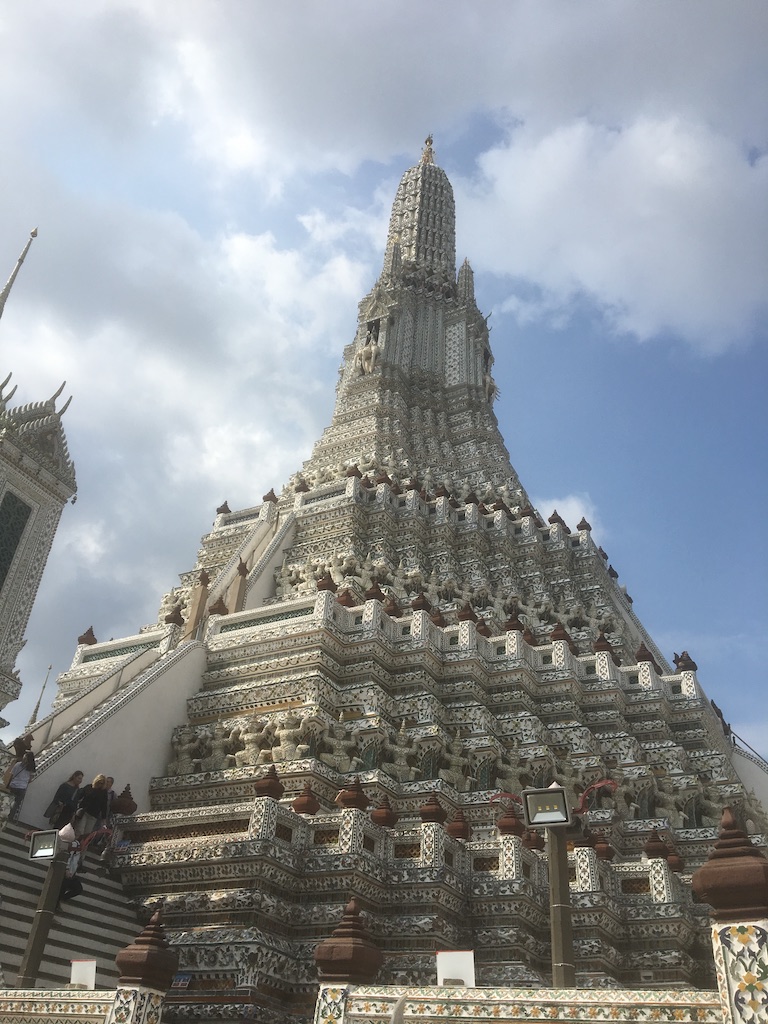
Wat Arun is only a short walk and boat ride from the Grand Palace. It's incredibly intricate and enormous - once you're there, it's impossible to get a picture showing the whole thing. Wat Arun is a Buddhist temple that was built sometime before the 18th century, but its most distinctive feature, the spires, were not built until the early 1800s. The main spire, standing 70 meters tall, is decorated with small pieces of glass and Chinese porcelain, housing sculptures of Chinese soldiers at its base. Visitors are typically allowed to climb to the middle tier, but the stairs are steep, making it difficult if you're out of shape or afraid of heights. The prayer room at the temple holds a large golden statue of the Buddha.
Shopping Centers
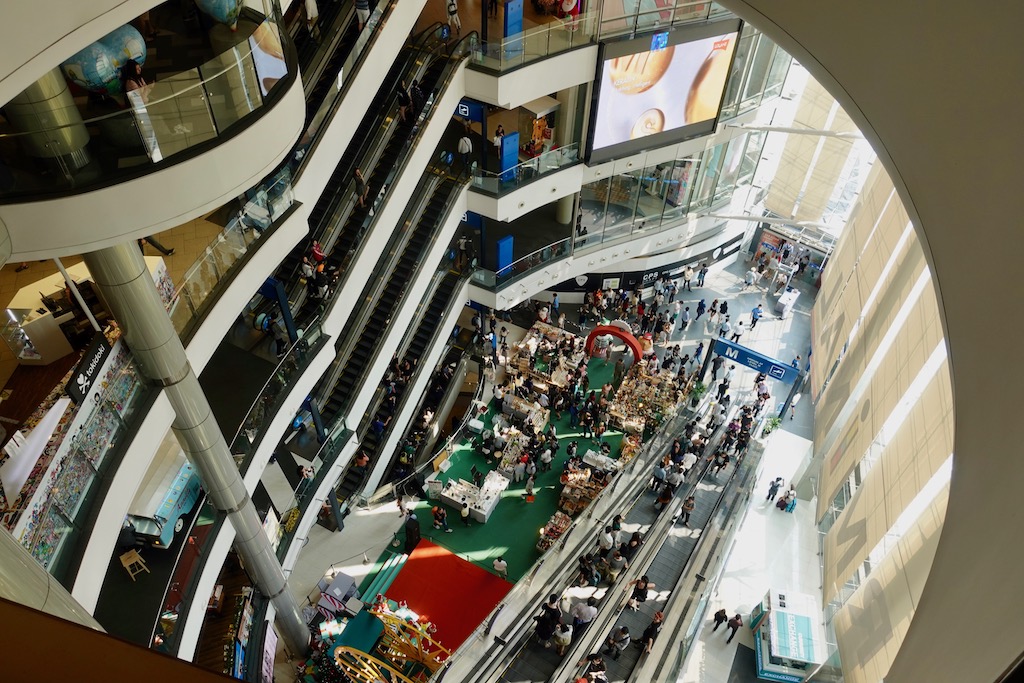
The shopping malls in Thailand are astounding. They're enormous and extremely high-end - you can buy a Hermès handbag or a Lamborghini. Terminal 21 is one such of these malls. It is nine stories tall and each floor is themed as a different city. We went there specifically to try Hawker Chan: a food stand that had received a Michelin star and started opening more permanent locations. The food was just ok, but seeing the shopping center was worth it. We also went to Iconsiam, the newest of these centers. Besides its eight floors, 100 dining options, and indoor floating market, it has Thailand's first and only Apple store, which was the impetus for the journey to the store, as Caitlin's phone had broken with three days left in the trip.
Mandalay Food House
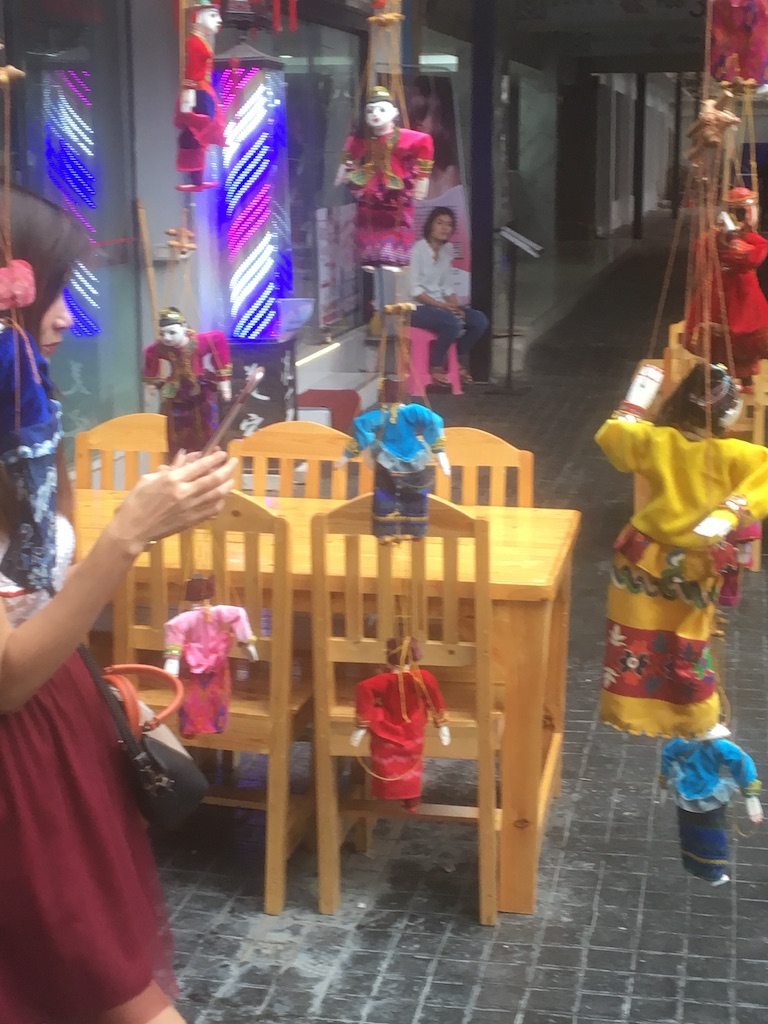
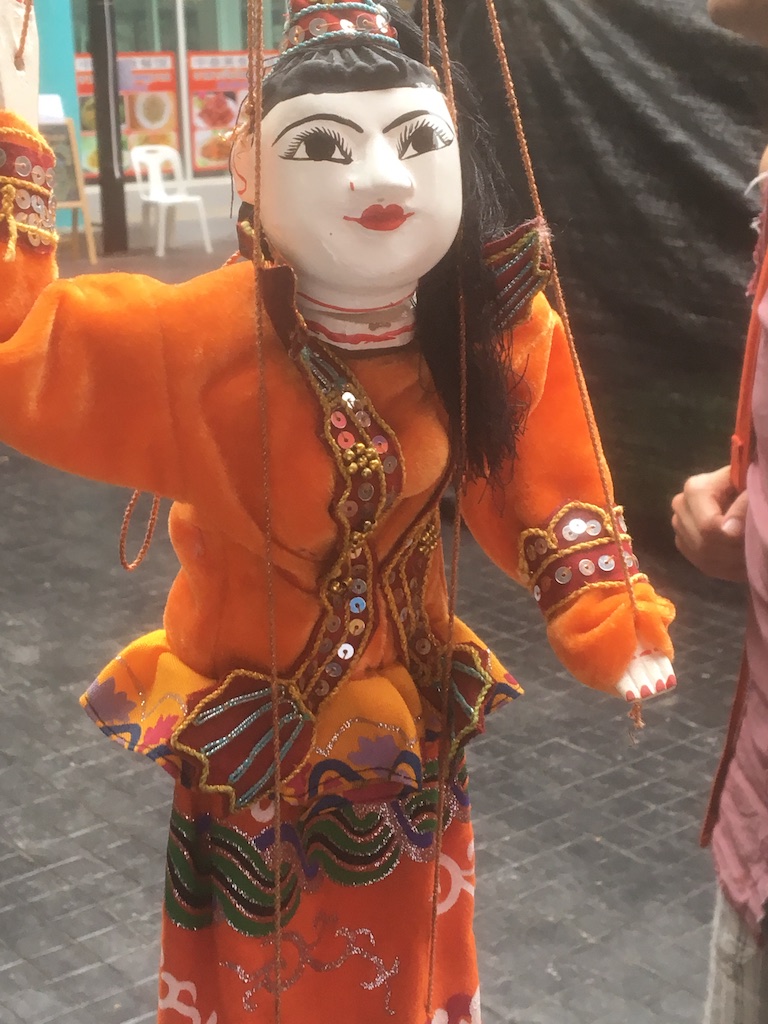
On our last night in Bangkok, Tyler and Fawn took Di, Caitlin, and J to Mandalay Food House, a Burmese restaurant. The food was very good and noticeably different than the Thai fare we had been eating all week. Plus, the restaurant was decorated with fun little marionettes everywhere.